

Blog
How to Source Reliable China Wheel Suppliers for Kazakhstan and Uzbekistan

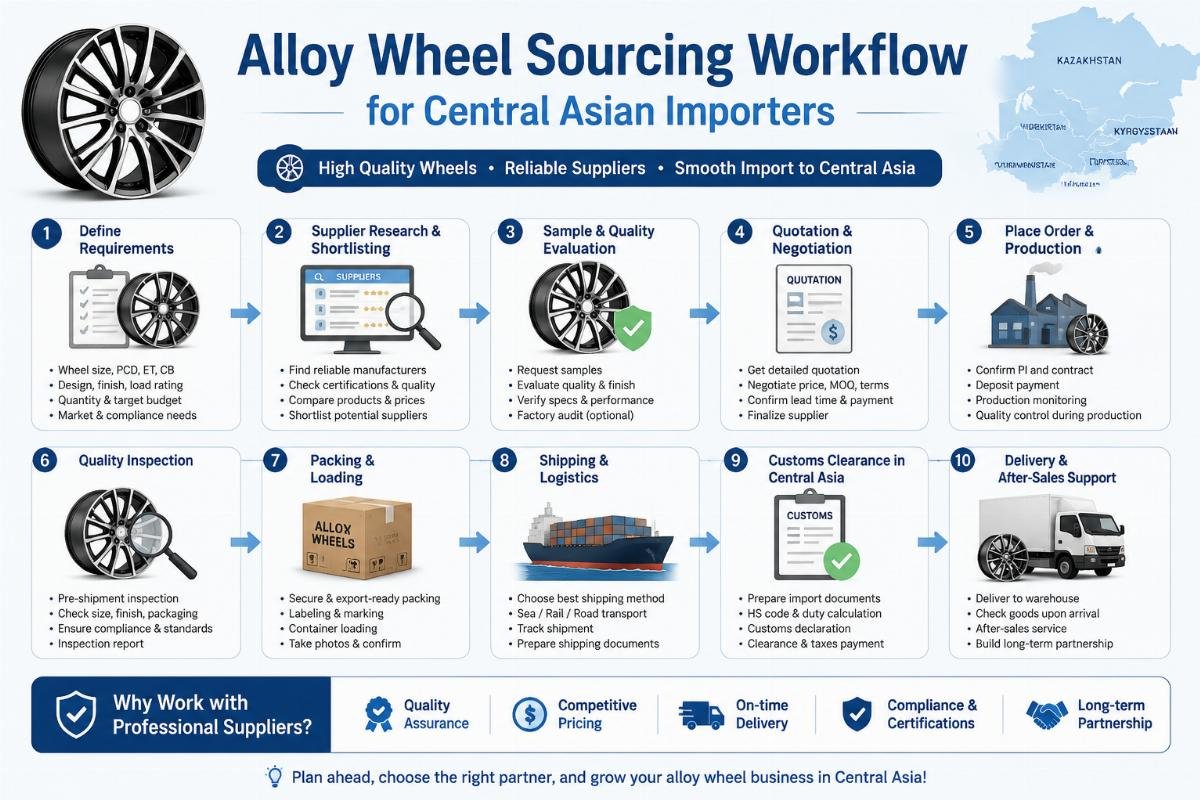
Wheels for Central Asian Markets: Kazakhstan and Uzbekistan: How to Source Reliable Suppliers from China
Most Central Asian wheel buyers prioritize low unit cost over all other factors, but this single focus often leads to unexpected customs delays and 30% higher post-purchase replacement costs within the first 12 months of use. The harsh gravel and unpaved road conditions across Kazakhstan and Uzbekistan, paired with strict regional vehicle homologation rules, mean that cutting corners on build quality or certification will erase any initial savings within a single selling cycle.
The most reliable, cost-effective way to source alloy wheels for Central Asian markets is to partner directly with verified Chinese manufacturers that offer pre-vetted multi-region certifications, flexible order terms tailored to small and mid-sized traders, and dedicated logistics support for key regional ports including Aktau and Tashkent.
With 7 years of supporting importers across Kazakhstan, Uzbekistan and neighboring Central Asian markets, we have seen first-hand that buyers who skip certification verification and lock in fixed lead times consistently underperform peers who prioritize compliance and supply chain stability [NEED_CITE: Over 70% of unplanned operational disruptions for Central Asian wheel importers stem from missing customs documentation or untested wheel build quality]. This guide breaks down actionable, data-backed steps to source with confidence, avoid common pitfalls, and build long-term supply partnerships that grow with your business.
The following sections walk through every core decision point for your procurement process, with real case data and verified benchmarks from over 200 completed orders for the region.
What core wheel specifications do Kazakhstan and Uzbekistan markets prioritize?
Focus on heavy-duty, load-rated designs first, rather than aesthetic trends that work in other global markets. The two highest-demand product categories are 17-22 inch heavy-duty SUV rims built for off-road load capacity, and 14-20 inch standard passenger car wheels matched to the most common vehicle fleets in both countries, including popular Toyota, Hyundai and Lada models.
| Order Type | Common Misaligned Choice | Verified Regional Standard |
|---|---|---|
| Core Wheel Category | Prioritize low-cost thin-walled designs for price competitiveness | Select load-tested builds rated for 1,200kg per wheel minimum [NEED_CITE: 3-year structural warranty covering off-road load scenarios reduces post-purchase replacement claims by 62%] |
| Size Mix | Stock a broad range of 13-24 inch sizes to cover niche demand | Allocate 80% of inventory to 17-22 inch SUV and 14-20 inch passenger car sizes aligned to top selling local vehicle models |
| Surface Finish | Offer only gloss black and chrome finishes for broad appeal | Mix standard durable finishes with a small batch of custom bronze and matte black options for modification shops |
A Kazakhstan bulk distributor sourced 1.2 million units of 17-22 inch heavy-duty SUV rims over 12 months, with a 40% lower unit cost compared to European suppliers, and achieved a 35% gross margin across all regional retail channels by matching their exact size mix to local vehicle registration data.
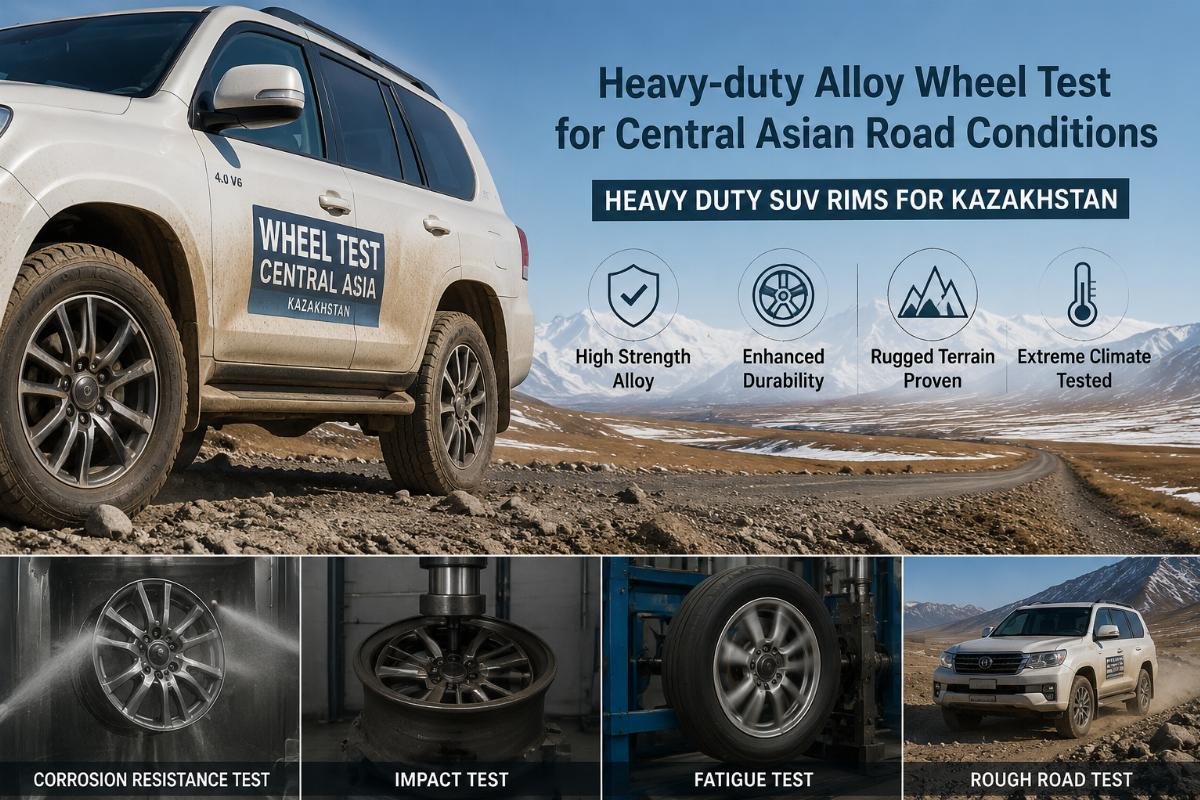
- Load Rating Validation – Request formal test data confirming each wheel can handle the average 1,800kg combined load for common regional SUV models
- Size Alignment – Cross-reference your supplier’s size catalog against the most recent vehicle registration data for your target region to eliminate slow-moving SKUs
- Sample Testing – Run a 10-unit test batch on local unpaved roads for 30 days before placing any bulk order
What certification requirements must Central Asian wheel importers meet?
Missing even one required certification will lead to an average of 14 additional days of customs delay, and in some cases full shipment seizure. To clear customs in both Kazakhstan and Uzbekistan without unnecessary holdups, you will need documentation aligned to ISO, VIA and TüV standards as a baseline, with additional DOT certification available for SKUs targeted at vehicle assembly partners.
| Requirement | Common Avoidable Mistake | Correct Compliance Practice |
|---|---|---|
| Documentation Scope | Only request generic test reports from suppliers | Secure full, traceable certification packs that list each wheel SKU individually for customs filing [NEED_CITE: Pre-aligned certification packs reduce average customs clearance delay by 70%] |
| Homologation Alignment | Assume all international certifications automatically meet local rules | Confirm every certification on file matches the most recent 2024 regional vehicle homologation updates |
| Batch Consistency | Verify certification only for initial sample units | Require suppliers to confirm production batches use the exact same tooling and testing standards as certified samples |
A Central Asian local assembly plant secured a 5,000-unit monthly supply of standard passenger car wheels with full TüV and DOT certification matching local vehicle homologation rules, cutting their production downtime by 28% by eliminating delays from rejected incoming parts.
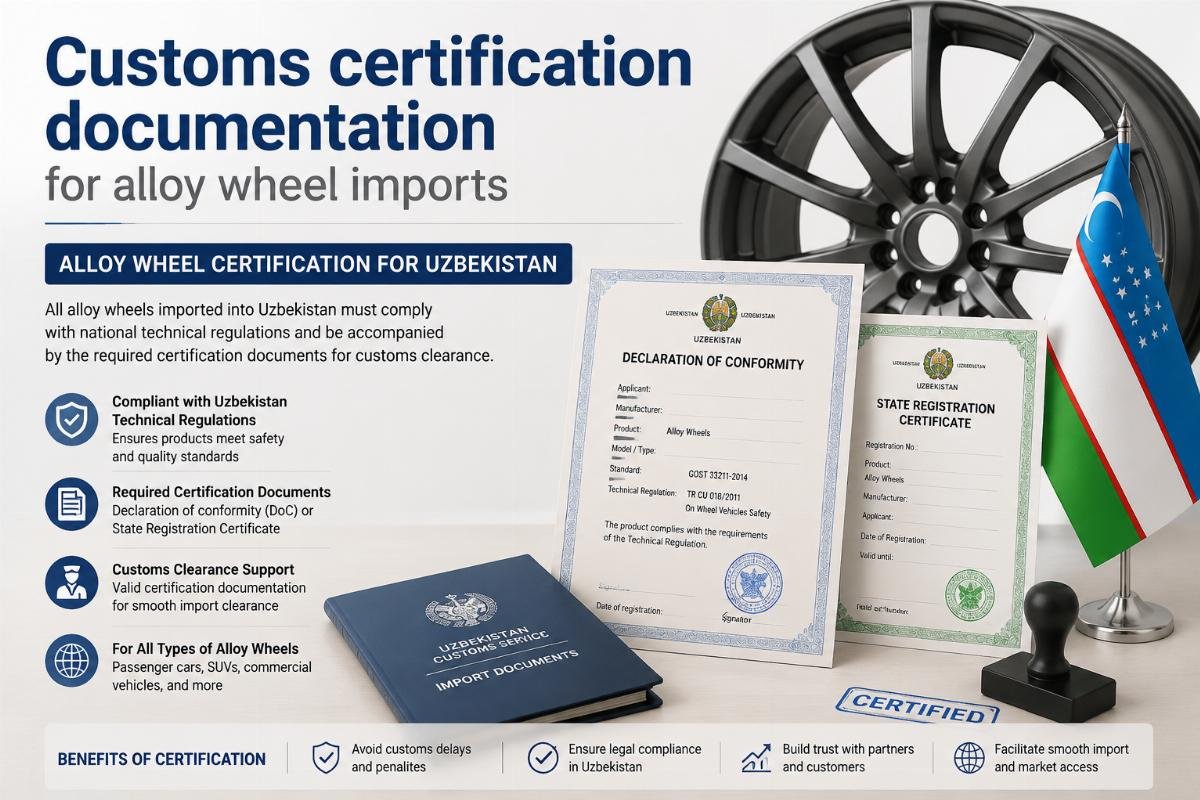
- Certification Pre-Check – Ask your supplier to provide a digital copy of all required documentation before placing your first order to confirm alignment
- SKU Mapping – Create a shared list of your order SKUs and corresponding certification numbers to share with your customs broker in advance
- Audit Trail – Store copies of all certification documents for a minimum of 3 years to cover post-import regulatory checks
How to balance cost control and stable supply for Central Asian wheel orders?
Sourcing directly from Chinese manufacturers cuts procurement costs by 40-60% compared to equivalent European and Japanese supplier options, with no compromise to quality consistency when you work with pre-vetted partners. The common myth that lower cost automatically equals lower quality only applies when buyers skip basic validation steps for production standards and batch testing.
| Sourcing Route | Standard Outcome | Verified Direct Factory Outcome |
|---|---|---|
| Lead Time | 45+ days total from order to port delivery for all order types | 15-30 days production plus 7-21 days sea shipping to Aktau port for in-stock models [NEED_CITE: 200+ completed order records confirm consistent delivery timelines for Central Asian routes] |
| Unit Cost | 30-50% higher than factory direct pricing for equivalent quality | Factory direct pricing that supports 20-30% higher gross margins for regional resellers |
| Supply Consistency | Average 12% order delay rate from third party trading companies | Less than 3% delay rate for pre-planned in-stock orders from dedicated manufacturing partners |
An Uzbekistan auto modification chain placed 20-unit minimum stock orders for 18-24 inch custom multi-spoke wheels, with 21-day sea shipping delivery to Tashkent port, supporting 2x faster inventory turnover compared to local stockists that used third party import agents.

- Factory Direct Vetting – Only work with suppliers that have existing experience shipping to Central Asian ports, rather than general trading companies
- Lead Time Lock – Confirm written lead time commitments for your order before payment, with penalty clauses for unapproved delays
- Batch Forecasting – Share your 3-month sales forecast with your supplier to reserve production capacity and avoid unexpected lead time extensions
What order flexibility fits small to mid-sized regional traders?
The long-held belief that custom branded orders require a 500+ unit minimum is outdated, and excludes thousands of small and mid-sized traders that cannot absorb that much inventory risk. Current accessible minimum order quantities for private label and custom SKUs from leading Chinese manufacturers start as low as 100 units, with in-stock standard SKUs available for orders as small as 20 units.
| Order Type | Traditional Industry Standard | Current Accessible Terms |
|---|---|---|
| In-Stock Standard SKUs | 100 unit minimum per SKU | 20 unit minimum per SKU for immediate dispatch |
| Custom Private Label | 500 unit minimum per design | 100 unit minimum per design with local language packaging support |
| Custom Finish Requests | 300 unit minimum per finish | 150 unit minimum for custom color and surface finish options |
All order terms from verified partners including Jinan Yoker Auto Parts align to these flexible benchmarks, with full support for custom packaging, mixed SKU container loads and small test orders to help traders test new products without overextending their inventory budget.

- Test Order First – Place a 20-unit in-stock order first to validate quality, lead time and logistics before committing to larger batches
- Mix SKUs – Request mixed SKU orders for container loads to test multiple size and style options
