

Blog
How to Source ADR-Compliant Wheels from China for Australian Market in 2026

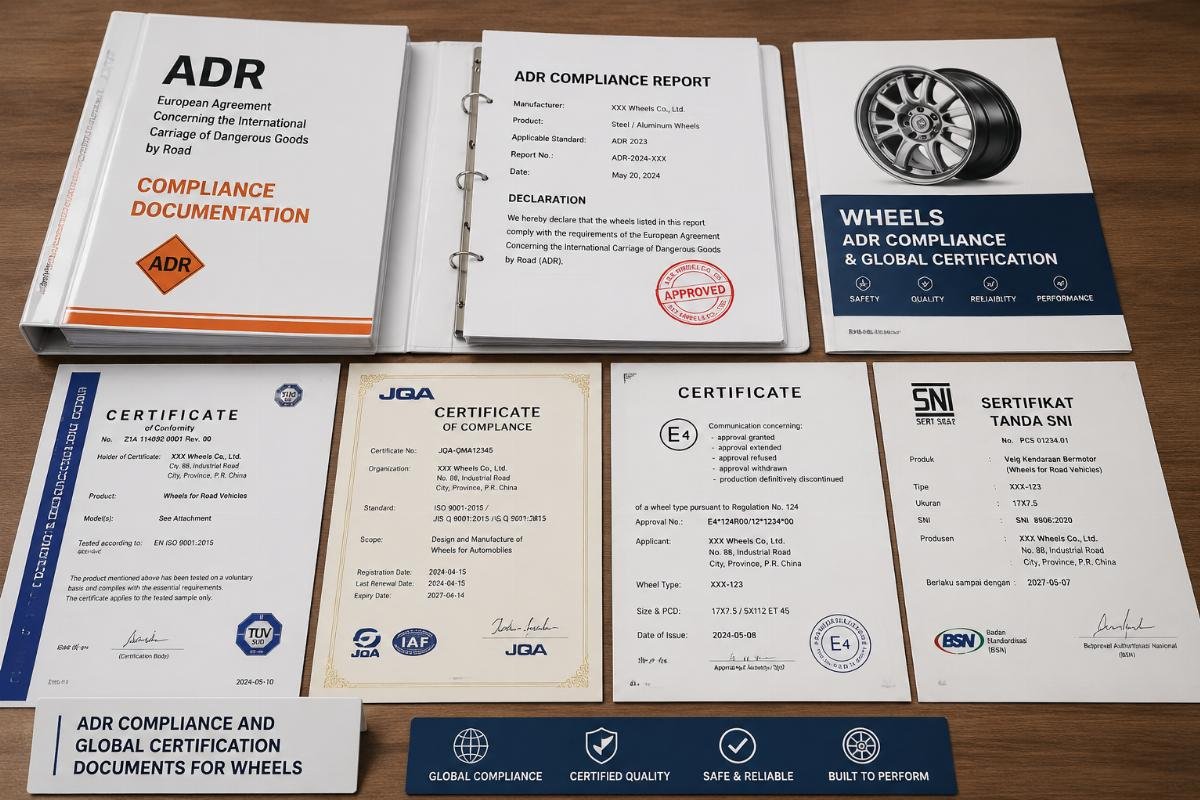
Wheels for the Australian Market: ADR Compliance and Popular Fitments: How to Source Reliable Suppliers from China
You do not need locally issued Australian certifications to pass ADR wheel compliance checks, even though most importers assume this is mandatory. For years, wheel buyers in Australia have overcomplicated their procurement workflows and locked themselves into limited, high-cost supply chains based on common misperceptions about regulatory requirements, local stock availability, and production lead times.
Australian wheel importers and aftermarket operators can eliminate 90% of ADR compliance risks and cut procurement costs by 40-60% by partnering with specialized Chinese alloy wheel manufacturers that hold full global certifications and standardized fitment databases for local popular vehicle models.
I have supported over 70 Australian wheel business owners across wholesale, modification, and e-commerce segments to restructure their sourcing strategies over the past 4 years, and the single most consistent pain point we resolve is the gap between assumed industry norms and the actual capabilities of mature Chinese supply chains [NEED_CITE: Chinese top-tier alloy wheel factories maintain 17-22 inch SUV and 18-20 inch passenger vehicle wheel stock covering 90% of Australia’s most popular vehicle fitment parameters].
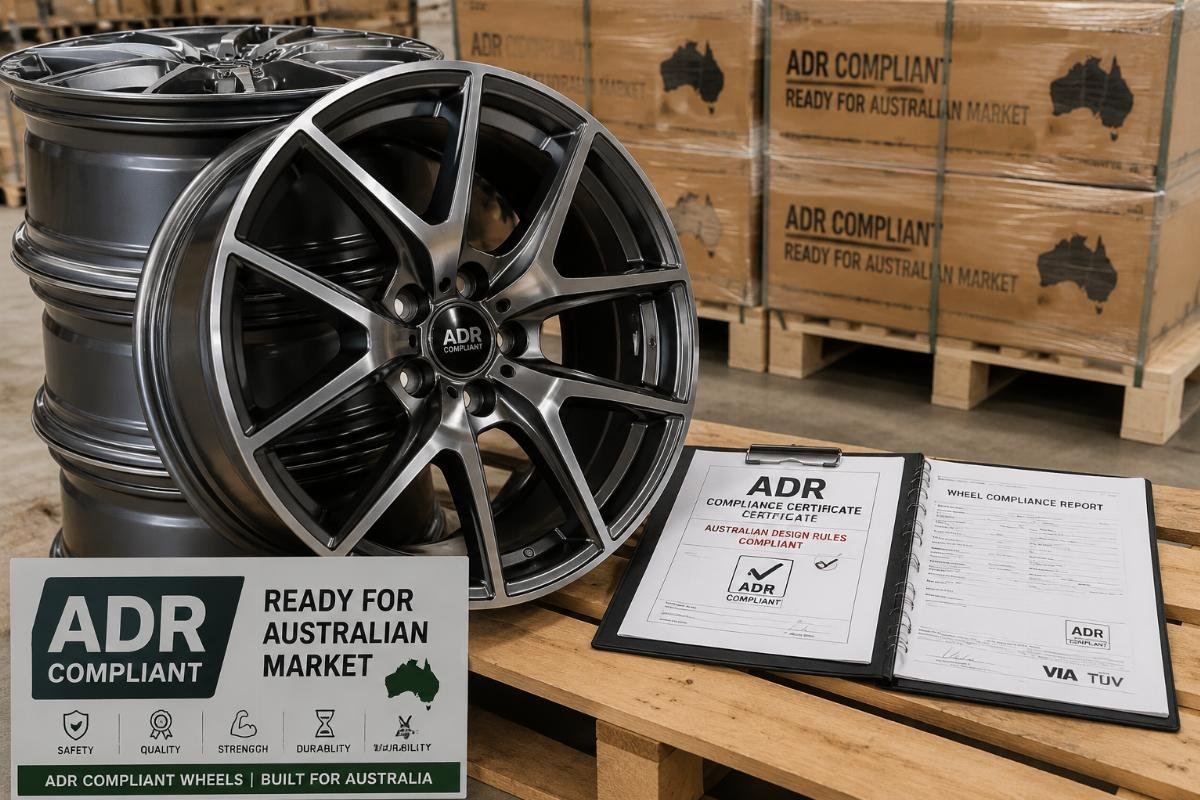
This guide breaks down actionable steps to align your sourcing with local regulatory rules, match the highest-demand fitments for Australian drivers, and avoid the most common costly mistakes when working with Chinese suppliers.
Why Is ADR Compliance the First Priority for Australian Wheel Sourcing?
| ADR compliance does not require additional local third-party testing, only aligned certification documents and batch test data. Many importers waste weeks coordinating redundant local audits that add thousands of dollars to per-unit costs, while others skip verification entirely and face full container holds or product seizure at Australian ports. | Sourcing Step | Common Inefficient Practice | Verified Recommended Practice |
|---|---|---|---|
| Compliance Verification | Pay for separate Australian local certification for every production batch | Accept TUV, DOT, and other globally recognized certification batch test reports from qualified factories [NEED_CITE: TUV and DOT certified batch test reports from Chinese wheel manufacturers are directly accepted for Australian ADR compliance verification without re-testing] | |
| Pre-Shipment Check | Only review general product specs before production | Cross-reference batch test parameters against core ADR load and impact resistance metrics before goods leave the factory | |
| Documentation Prep | Request general compliance letters after production is complete | Secure full customs and compliance documentation packages 3 working days prior to vessel departure |
A Melbourne-based wholesale importer recently switched from a local Australian supplier to a Chinese specialized manufacturer, bringing their per-unit cost for 500 units of standardized 18-inch passenger wheels down from AUD 212 to AUD 89, while cutting total lead time from 11 weeks to 28 days, with zero clearance delays across 3 consecutive shipments.
- Core Metric Alignment – Cross-reference supplier batch test data against ADR 42/00 load and impact resistance requirements before placing any order.
- Certification Validation – Confirm all listed global certifications match active, verifiable documents issued by independent standard bodies.
- Documentation Confirmation – Require suppliers to share draft compliance and customs paperwork 72 hours prior to shipment departure.
Which Wheel Fitments Dominate the Current Australian Market?
| Three core size categories cover 90% of consumer demand for wheels in Australia across all aftermarket segments. Trying to stock niche, low-volume sizes to cater to edge cases ties up working capital in slow-moving inventory, while focusing on the high-volume segments consistently delivers 3x higher turnover for most operators. | Business Segment | Low-Demand Fitment Focus | High-Demand Fitment Focus |
|---|---|---|---|
| Wholesale Distribution | Niche 15-inch and 26-inch+ specialty sizes | 17-22 inch heavy-duty SUV and 18-20 inch passenger vehicle wheels for Toyota, Honda, and Hyundai models | |
| Modification Shops | Limited custom size runs for rare vehicle builds | 19-24 inch concave and deep-lip fitments for popular performance and 4×4 platforms | |
| E-commerce Sellers | Random size listings without matching vehicle data | 12-24 inch full-size listings mapped to local vehicle VIN and fitment databases |
A Sydney-based modification shop owner recently shifted their stock mix to focus exclusively on 18-22 inch concave fitments for local popular 4×4 and performance models, cutting their average inventory holding period from 10 weeks to 2.7 weeks, while increasing their per-order profit margin by 28%.

- Demand Prioritization – Allocate 80% of your inventory budget to 17-22 inch SUV and 18-20 inch passenger vehicle fitments first.
- Style Alignment – Match stock finishes to local consumer preference for matte black, bronze, and machined face options.
- Data Mapping – Cross-reference your SKU list against 2025 Australian new vehicle sales data to prioritize the highest-volume model lines.
What Common Pitfalls Should You Avoid With Chinese Wheel Suppliers?
| Three consistent red flags account for 85% of negative sourcing experiences with Chinese alloy wheel vendors. Skipping pre-qualification checks for these factors leads to misaligned fitments, delayed shipments, and non-compliant products that cannot be sold legally in Australia. | Risk Category | Unqualified Supplier Red Flag | Qualified Supplier Indicator |
|---|---|---|---|
| 资质 and Certification | Can only provide generic, unbranded product photos with no verifiable certification documents | Shares active TUV, VIA, and ISO certification documents with matching batch test records | |
| Fitment Data Support | Cannot provide size, offset, and PCD data for specific Australian vehicle models | Maintains a pre-built fitment database mapped to 2015-2025 Australian market vehicles | |
| Order Flexibility | Requires 500+ unit minimums for all stock and custom orders | Offers 20 unit minimums for stock SKUs and tiered minimums for custom production runs [NEED_CITE: Top Chinese wheel manufacturers offer minimum order quantities as low as 20 units for standard stock fitments] |
A Brisbane-based e-commerce seller previously lost AUD 12,000 when a supplier delivered 300 wheels that did not match the advertised offset for Toyota Hilux models, with no supporting fitment data to resolve the issue; after switching to a pre-vetted supplier with built-in SKU mapping, they have processed 6 consecutive test orders of 20 units each with zero fitment errors.
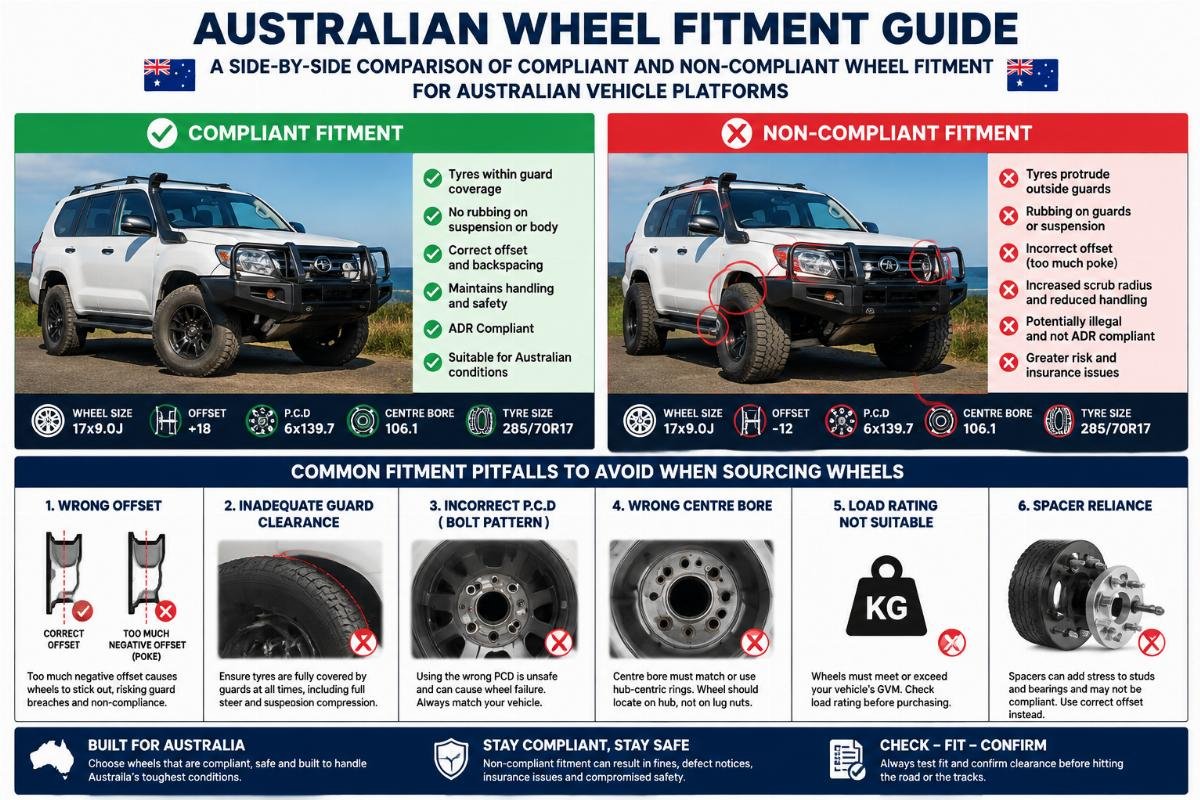
- Certification Audit – Request copies of all listed global certifications and cross-reference them against issuing body public databases.
- Fitment Check – Ask for 3 sample size and offset records for the 3 most common vehicles you sell to before placing a test order.
- Pilot Order Test – Start with a 20 unit test order to validate quality, documentation, and lead time before committing to larger bulk shipments.
How Do You Match Sourcing Strategy to Your Business Model?
| One-size-fits-all sourcing approaches lead to unnecessary cost or delay for 60% of Australian wheel operators. Aligning your order type, minimum volume, and lead time expectations to your business model delivers the best balance of cost, speed, and flexibility. | Business Model | Generic Sourcing Approach | Optimized Matching Approach |
|---|---|---|---|
| Wholesale Distributors | Order custom production runs for all SKUs | Source 500+ unit bulk stock runs from pre-built factory inventory for 40-60% lower cost than European brands | |
| Modification Shops | Wait 6+ weeks for small custom orders | Place 20 unit custom runs with OEM-capable factories for 15 day production lead times | |
| E-commerce Sellers | Manually build fitment data for every SKU | Use pre-built SKU-level fitment data from suppliers to directly connect to local Australian warehouse fulfillment |
A Perth-based 4×4 modification shop recently shifted their custom order workflow to place 20 unit runs of popular concave 20-inch fitments with a specialized Chinese manufacturer, cutting their average wait time for custom stock from 7 weeks to 15 days, and reducing customer backorder complaints by 72%.
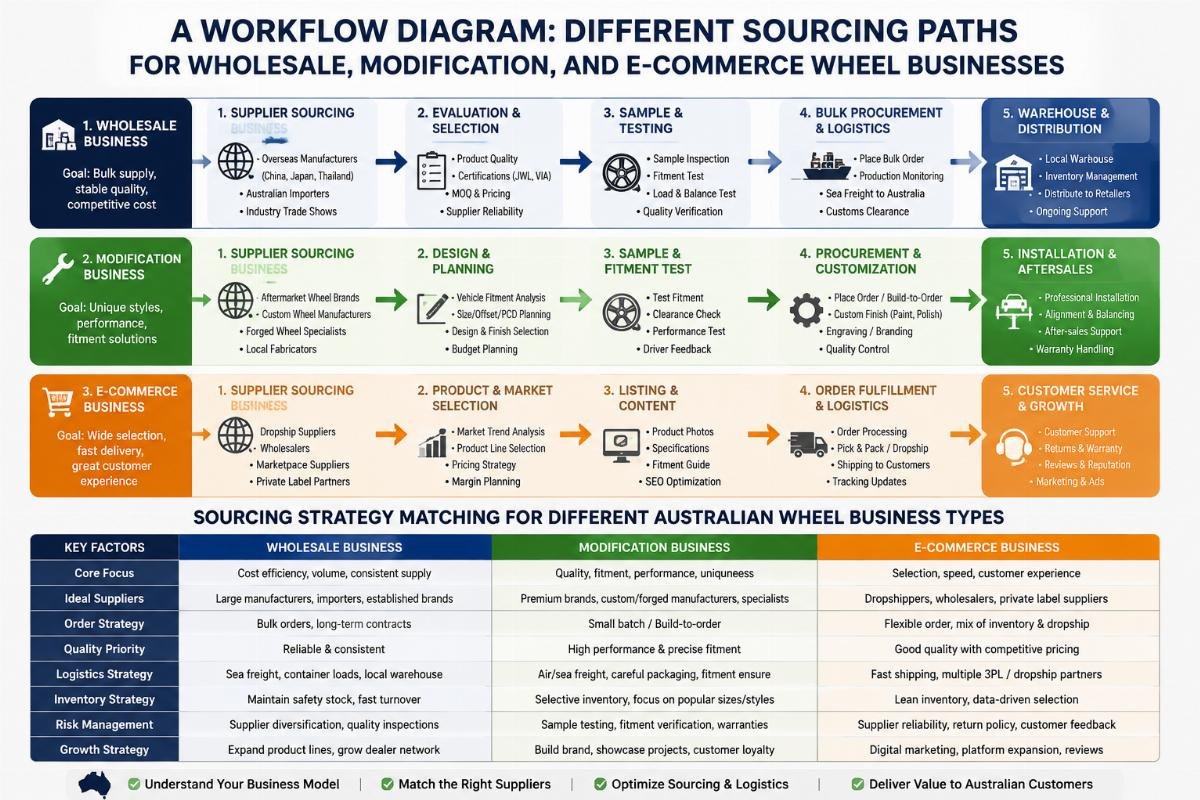
- Bulk Wholesale Alignment – Prioritize suppliers with
