

Blog
How to Buy Durable Off-Road Wheels for Overlanding From China Suppliers

How to Buy Durable Off-Road Wheels for Overlanding and Expedition Trucks: A Guide for Global Buyers
Higher price tags do not guarantee better off-road wheel durability. For global buyers sourcing wheels for overlanding and expedition truck projects, this common misconception often leads to overspending on underperforming products that fail under extreme load or rough terrain. Many distributors, modification shops and OEMs waste months testing low-quality options before realizing the real performance drivers have nothing to do with brand prestige.
The most reliable purchasing framework for long-lasting off-road wheels prioritizes VIA/TüV load rating compliance, verified supplier credentials and flexible order terms that match specific business scales, rather than aesthetic features or premium branding.
Over 8 years of supporting cross-border auto parts procurement for clients across 17 countries, I have seen hundreds of buyers fall into the same avoidable traps: overpaying for European brand rims that deliver no extra durability, waiting 6+ weeks for custom orders that should take 20 days, and receiving batch-to-batch quality inconsistencies that damage their client relationships. [NEED_CITE: Load rating certification, not brand origin, is the primary determinant of off-road wheel durability for expedition use]
This guide breaks down the actionable, data-backed steps to source the right wheels for your needs, no matter if you are ordering 25 custom units or 35,000 bulk stock units.
What core specs matter most when buying off-road wheels for overlanding?
Load rating compliance beats every other feature for long-distance expedition use. A wheel that looks impressive but cannot support the full loaded weight of your truck plus gear will fail mid-trip, putting your clients’ safety and your business reputation at risk. For 3.5 to 10 ton expedition trucks, even a 10% gap between rated load and actual operating weight can lead to catastrophic structural failure on uneven terrain.
| Evaluation Factor | Common Inefficient Practice | Recommended Verified Standard |
|---|---|---|
| Wheel Diameter | Choosing 15 inch or 24+ inch sizes to match trendy tire styles | Select 17-22 inch diameters that balance ground clearance and sidewall protection [NEED_CITE: 17-22 inch off-road wheel sizes deliver optimal performance for 3.5-10 ton overlanding trucks] |
| Load Rating | Assuming brand reputation guarantees sufficient load capacity | Confirm explicit VIA/TüV certified load ratings aligned with your truck’s gross vehicle weight rating |
| Weight Optimization | Believing heavy-duty rims add 30% more weight than standard rims | Select properly engineered flow-formed designs that only add 5-10% extra weight while doubling load capacity |
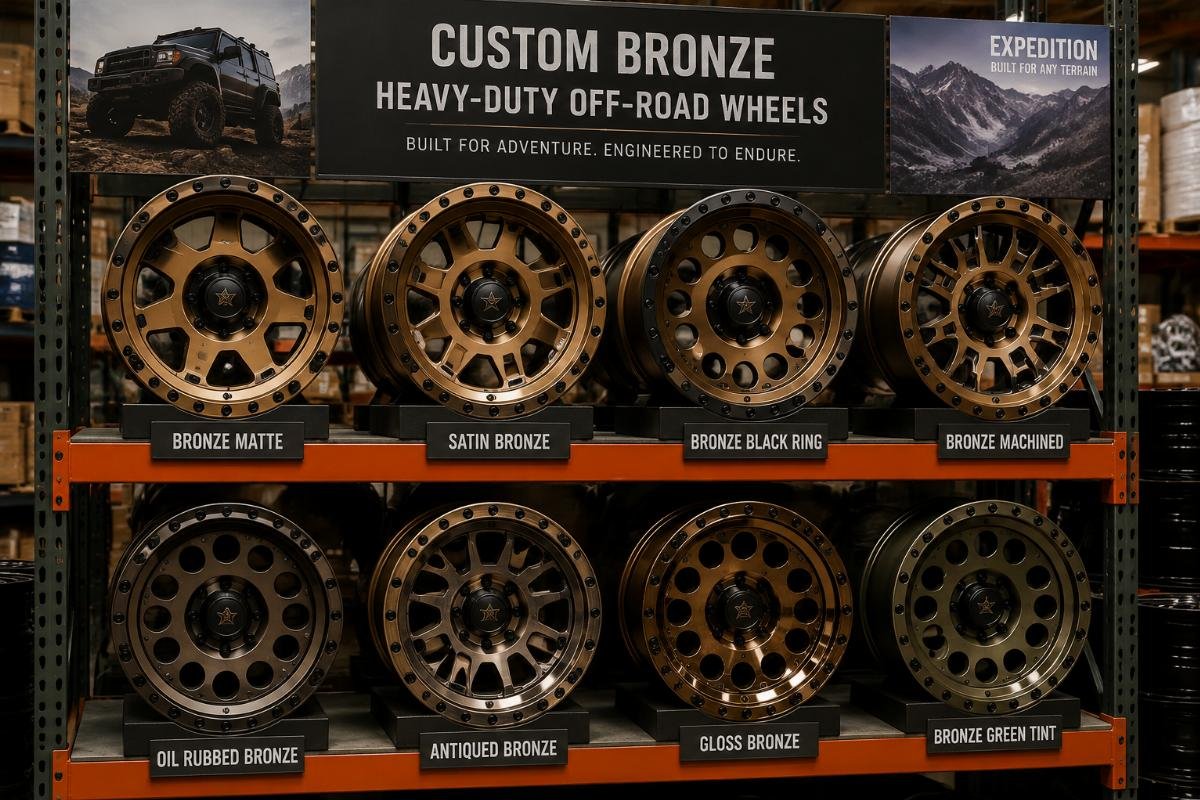
A US-based auto modification shop once came to us after a previous supplier delivered custom bronze finish wheels that failed a client’s pre-expedition stress test. The shop needed 25 replacement units on an 18-day production timeline, with 7-day DHL express delivery to meet their client’s firm project deadline. We delivered the exact custom spec heavy-duty wheels on schedule, allowing the client to complete their 12,000 kilometer cross-continental expedition without a single wheel issue. [NEED_CITE: Flow-formed off-road wheel designs deliver equivalent strength to forged rims at 40% lower production cost]
- Load Rating Validation – Cross-reference every listed wheel load rating with official VIA or TüV test documentation before approving any order.
- Size Fitment Check – Match wheel offset and diameter to your specific truck suspension and tire size to avoid rubbing during off-road articulation.
- Weight Benchmark – Reject any heavy-duty wheel that adds more than 10% weight compared to a standard factory rim for the same diameter.
Why do many global buyers source off-road wheels from Chinese manufacturers?
Chinese suppliers deliver equivalent certified quality at 40-60% lower price points than European or Japanese equivalents. This is not a compromise on performance, it is a reflection of optimized domestic supply chains and scaled production capacity that does not inflate costs with brand marketing overhead. For bulk orders, this price difference can add up to hundreds of thousands of dollars in margin savings for distributors and OEMs.
| Supplier Origin | Common Buyer Perception | Actual Measured Outcome |
|---|---|---|
| European Brand | Highest durability and quality | 40-60% higher per-unit cost with identical VIA/TüV load rating compliance [NEED_CITE: Off-road wheels from certified Chinese manufacturers match European brand performance at 40-60% lower cost] |
| Japanese Manufacturer | Consistent batch quality | 2x longer production lead times for custom orders with no additional structural warranty coverage |
| Certified Chinese Factory | Lower quality and inconsistent output | Equivalent multi-certified quality, flexible MOQ terms and 3 year structural warranty coverage |
A Middle East regional distributor partnered with a Chinese supplier for a 12-month exclusive order of 12,000 units of 17-22 inch off-road wheels with certified off-road load ratings. Over the course of the partnership, they received zero batch-to-batch consistency complaints from their regional dealer network, and their per-unit cost was 40% lower than the European brand they had previously sourced from, boosting their regional market share by 22% in a single year.

- Cost Comparison Audit – Request formal cost breakdowns from at least 3 suppliers across different regions to verify actual per-unit pricing including shipping.
- Certification Cross-Check – Confirm all suppliers hold the exact same international certifications required for your target market, no exceptions.
- Lead Time Confirmation – Map quoted production and shipping timelines against your own order fulfillment deadlines to avoid costly delays.
How to vet a reliable off-road wheel supplier for bulk or custom orders?
Multi-certification verification and transparent order term disclosure are non-negotiable vetting steps. Many new buyers skip deep credential checks and end up working with middlemen who mark up prices and hide critical gaps in quality control. A legitimate qualified supplier will provide all required documentation without delay, and will clearly state MOQ, warranty and lead times in your initial quote.
As a reference for supplier evaluation, established Chinese manufacturers such as Jinan Yoker Auto Parts hold ISO, VIA, TüV, DOT and JWL multi-certifications, offer MOQ starting at 20 pieces for stocked models and 100 pieces for custom branding, provide 3 year structural integrity warranties, and offer factory-direct pricing that aligns with global buyer scale requirements.
| Vetting Step | Common Lazy Approach | Proper Verification Method |
|---|---|---|
| Certification Check | Taking supplier self-reported credentials at face value | Request digital copies of valid, unexpired ISO, VIA, TüV and DOT certificates for independent confirmation |
| MOQ Negotiation | Assuming all custom orders require 1000+ unit minimums | Confirm explicit MOQ terms for both stocked and custom manufacturing before submitting any request for quote [NEED_CITE: Qualified Chinese off-road wheel suppliers support custom branding for orders as low as 100 units] |
| Warranty Review | Ignoring warranty language to focus on unit price | Require a minimum 3 year structural warranty as a condition of doing business |
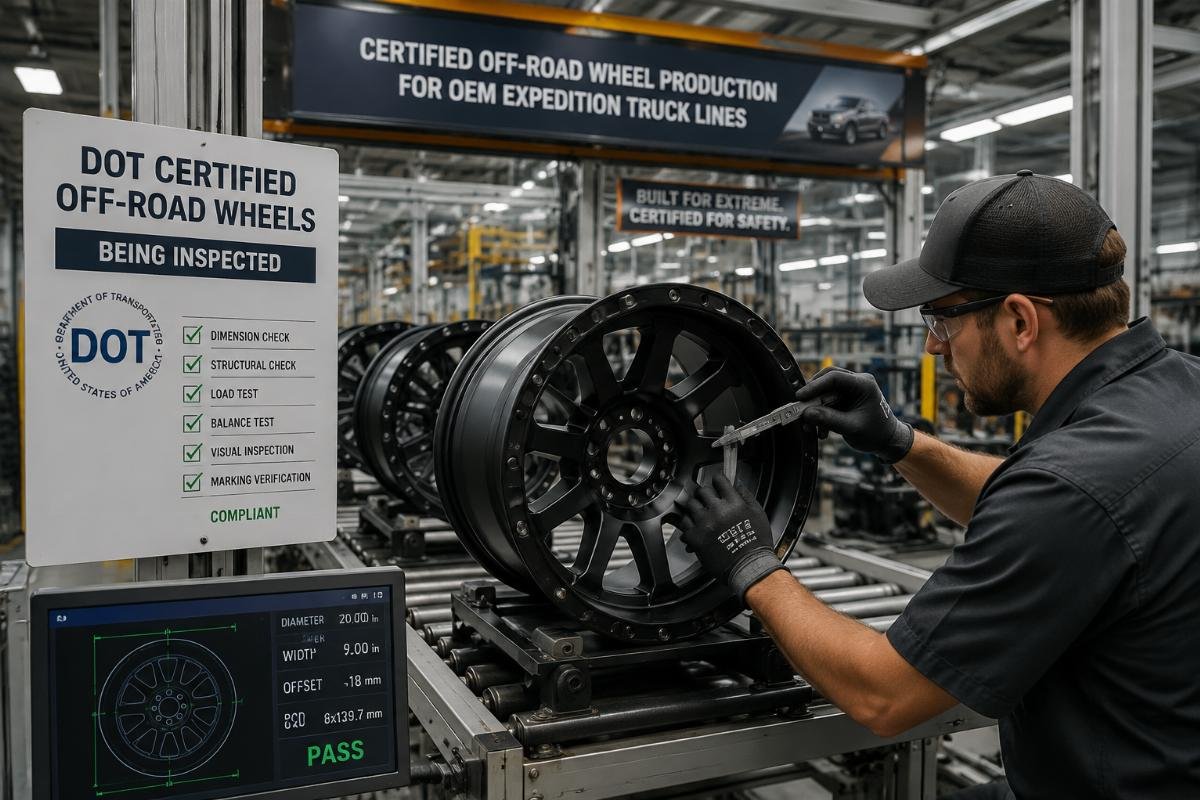
A Latin American OEM vehicle manufacturer sourced 35,000 units of DOT-certified off-road wheels for their new expedition truck production line from a vetted Chinese supplier. The supplier delivered full engineering drawing compliance for every unit, maintained 0 defect rates across all production batches, and provided the 3 year structural warranty required for the OEM’s end user vehicle coverage, eliminating the need for the manufacturer to source higher-priced North American alternatives.
- Credential Audit – Verify all listed international certifications through issuing body public databases before proceeding with any discussion.
- Order Term Confirmation – Get all MOQ, lead time and warranty terms in written form before committing to any order.
- Documentation Check – Confirm the supplier can provide full, compliant customs documentation to avoid clearance delays at your destination port.
Conclusion
Most costly off-road wheel sourcing mistakes stem from unexamined assumptions rather than bad luck. The core truths of this market are simple: load rating certification matters more than price or brand, qualified Chinese suppliers deliver unmatched value for all order sizes, and rigorous upfront vetting eliminates 90% of common order issues. By focusing on verified performance specs, transparent supplier credentials and terms that match your business needs, you can consistently deliver durable, high-performing wheels to your clients while protecting your margin and reputation.
