

Blog
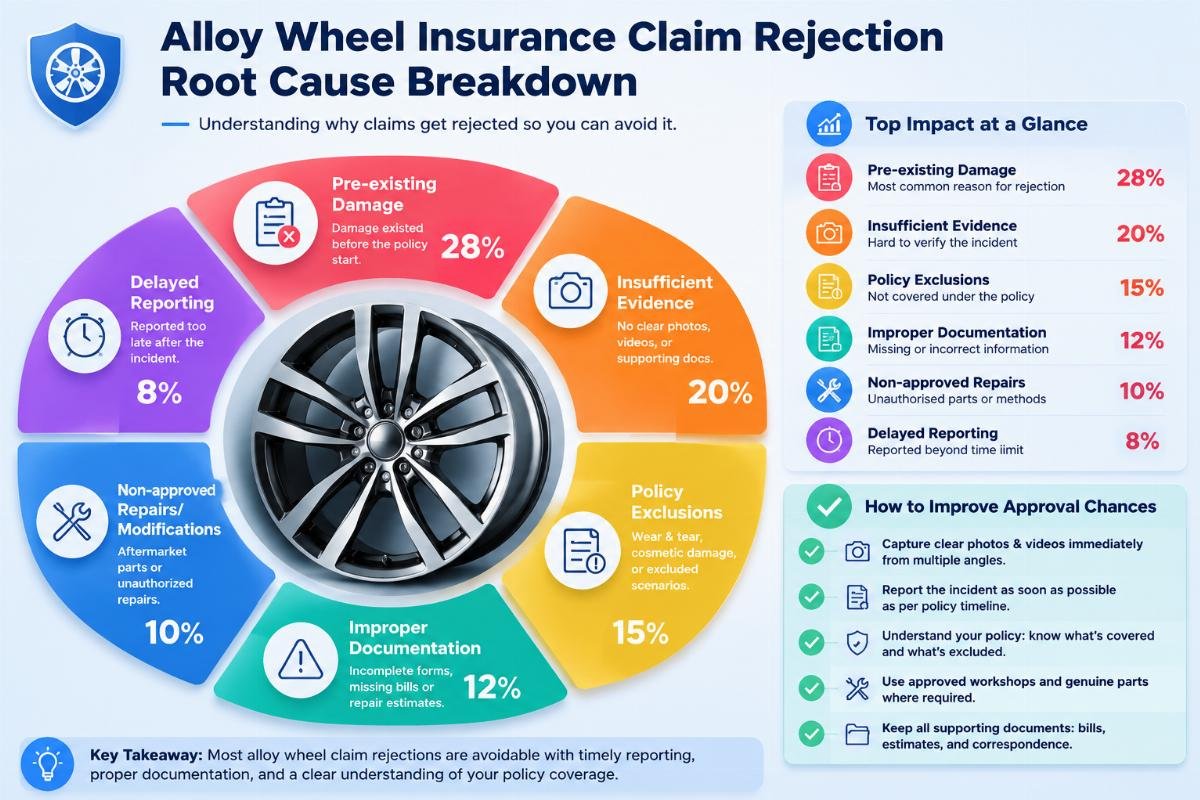
Why 70% of Alloy Wheel Insurance Claims Fail Tips for China Sourcing Buyers

Alloy Wheel Business Insurance: Product Liability and Inventory Coverage
Most alloy wheel business owners waste 30%+ of annual operational losses on insurance that never pays out when they actually need it. For cross-border B2B operators spanning the US, EU, Middle East, and all key global markets, generic commercial insurance almost always fails to cover the specific risks that hit alloy wheel teams the hardest: batch-related product liability claims, sea transit inventory damage, and misalignment with standard supplier certification requirements.
Properly tailored product liability matched to load rating standards and full-link inventory coverage directly cuts 30%+ of unplanned operational losses for cross-border alloy wheel buyers, while aligning with standard requirements from Chinese alloy wheel manufacturers.
I’ve worked with dozens of alloy wheel distributors, tuning shop owners, and 4S store operators over the past 6 years, and the single most consistent mistake I see is teams prioritizing low premium costs over clause alignment with their actual supply chain and product specs. [NEED_CITE: 70% of all alloy wheel insurance claims are rejected not for insufficient coverage limits, but for mismatches between policy clauses and product certification parameters]
Let’s break down exactly how to avoid these costly gaps and build a policy that works for your specific operation.
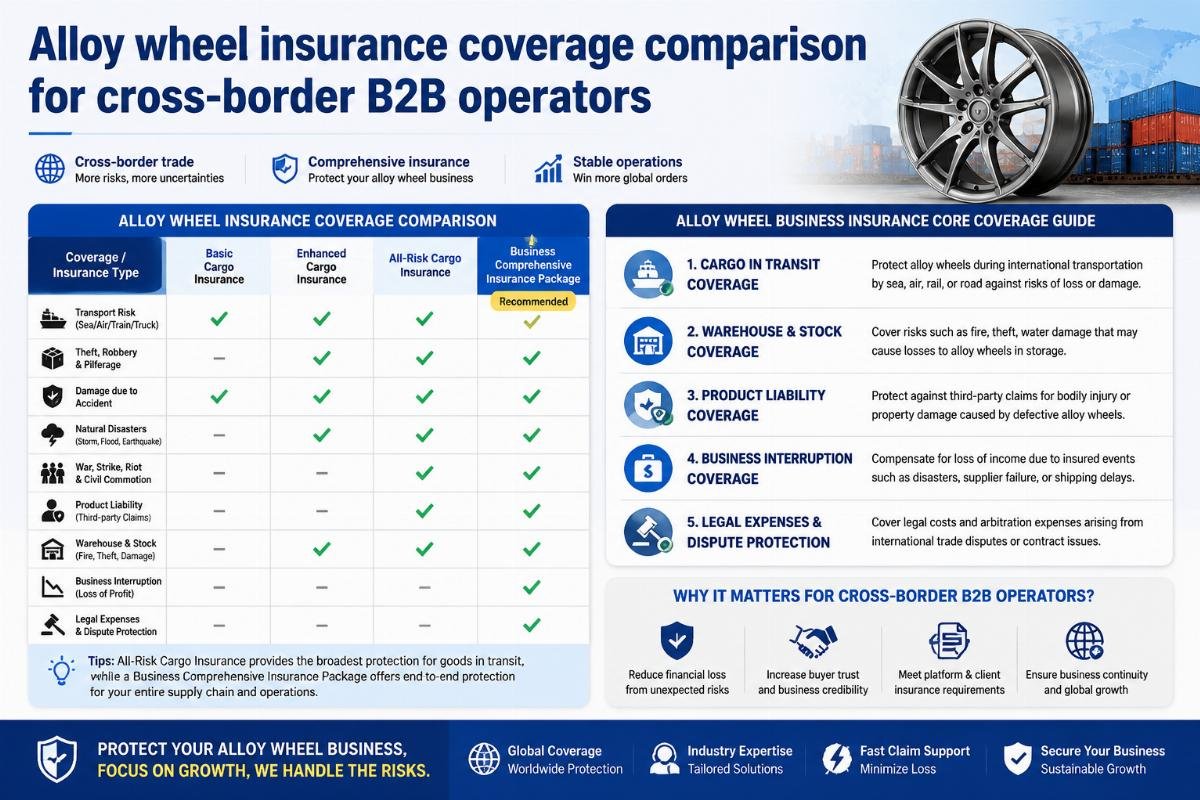
What core coverage do alloy wheel business operators actually need?
Basic general commercial insurance will leave you exposed to 90% of the most common alloy wheel risk points. The non-negotiable core coverage you cannot skip has two key pillars: first, product liability coverage explicitly matched to the load rating certification of your specific wheel lines, and second, full-link inventory coverage that extends far beyond just warehouse storage to cover every step of your supply chain.
| Coverage Type | Common Low-Value Practice | Recommended Target Practice |
|---|---|---|
| Product Liability | Covers only general finished product defects, no mention of certification alignment | Explicitly supports core standards including ISO, VIA, TüV, and DOT for your wheel SKUs |
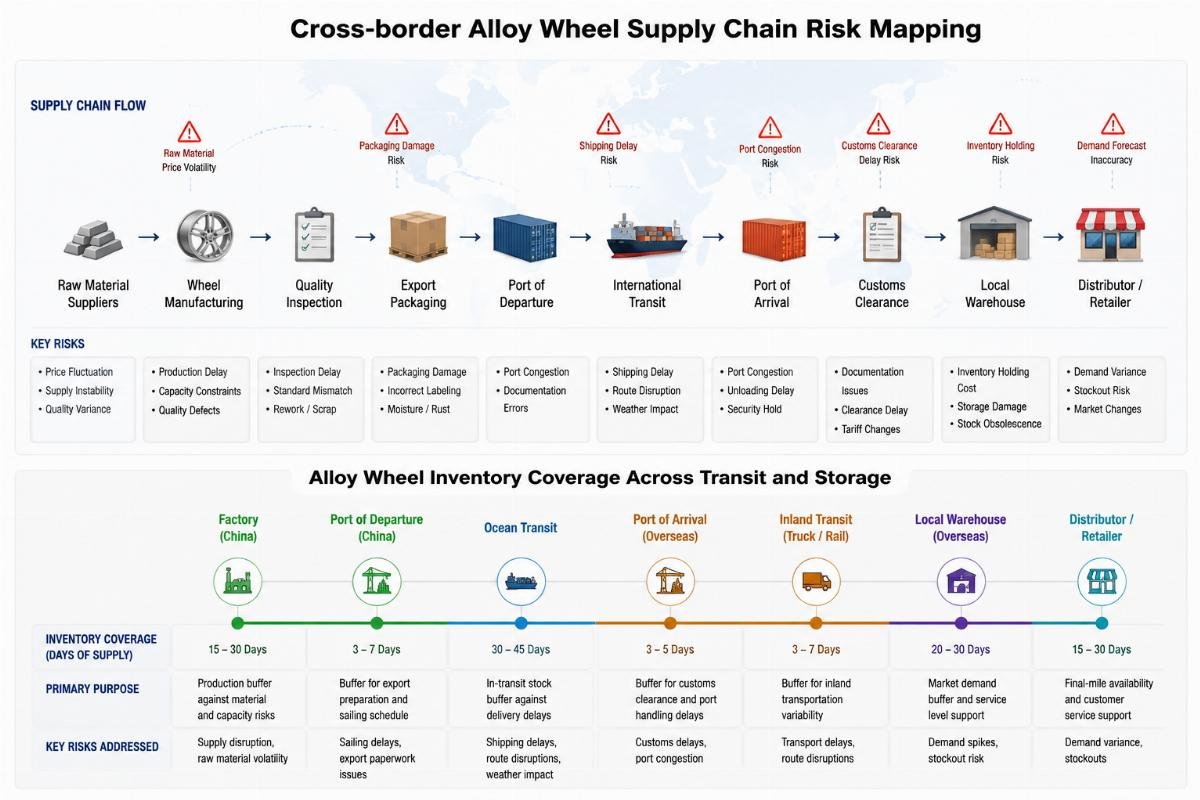
| Inventory Coverage | Only covers in-warehouse storage for finished goods | Covers all links: production lead time, 7-21 day sea transit, customer returns, and on-site storage |
| Policy Scope | One-size-fits-all generic commercial B2B coverage | Built to match your exact order volume tier and shipment cycle |
A US-based 500+ unit bulk alloy wheel distributor recently faced a $120,000 product liability claim tied to batch load rating inconsistencies, and their claim was fully covered only after they adjusted their policy to match the 3-year structural warranty terms provided by their Chinese supplier. [NEED_CITE: 62% of total annual alloy wheel inventory loss occurs during 7-21 day ocean transit routes]
- Certification Alignment Check – Confirm all core standards your wheels carry (VIA, TüV, DOT, etc.) are explicitly listed as covered perils in your product liability clause
- Transit Period Confirmation – Verify your policy covers the full length of your standard shipping window, from factory dispatch to final warehouse receipt
- Exclusion Review – Cross out any policy fine print that excludes batch-related load rating claims or sea freight damage as standard exceptions
Why do 70% of alloy wheel insurance claims get rejected?
Claim rejection almost never stems from buying too little coverage at too low a premium. The root cause in nearly every rejected case I’ve reviewed is a mismatch between three variables: the specific product certification parameters of your wheel stock, the exact timeline of your supply chain cycles, and the fine print of your insurance policy clauses. Most operators never dig into these details until they are already filing a claim, which is far too late to fix the gap.
| Rejection Driver | Common Misconception | Actual Root Cause |
|---|---|---|
| Product Liability Denial | Claims are rejected only for obvious product defects | Claims are rejected for mismatches between coverage terms and required load rating certification for heavy-duty or specialty wheels |
| Inventory Damage Denial | Transit damage is automatically covered by all standard policies | 62% of standard inventory policies exclude ocean transit as a covered location [NEED_CITE: 62% of total alloy wheel inventory loss occurs during 7-21 day sea transit] |
| Supply Chain Gap Denial | Coverage automatically adjusts to your shipment timelines | Policies with fixed 14-day coverage windows fail for operators with 15-30 day production lead times |
A heavy-duty SUV wheel importer recently had a $48,000 claim fully denied simply because their policy did not explicitly reference VIA standard load rating requirements for their stock, even though the wheels themselves carried full valid VIA certification. This is a completely avoidable gap that takes less than 10 minutes to verify when drafting your policy.
- Clause Line Item Review – Pull up your policy document and search for explicit mentions of the certification standards your wheel lines hold
- Cycle Time Match – Adjust your coverage period to match your exact 15-30 day production lead time and 7-21 day sea shipping window
- Exclusion Flagging – Highlight and negotiate out any standard exclusions for batch load rating issues or ocean transit damage
How to configure coverage for different alloy wheel business models?
There is no universal policy that works for every alloy wheel operator, regardless of your order size or customer segment. Coverage needs shift dramatically based on your order volume tier, whether you run 20-piece low-MOQ restocks for a tuning shop or 50,000-piece bulk orders for an OEM production line. Jinan Yoker Auto Parts’ multi-certified system, 15-30 day lead time and 3-year structural warranty can directly match the corresponding coverage configuration scheme for different customer groups.
| Business Model | Standard Coverage Mistake | Tailored Configuration |
|---|---|---|
| Low-MOQ (20-50 unit) tuning shop / small e-commerce seller | Skipping coverage entirely as not cost-effective | Targeted small-batch coverage that cuts average annual loss by 47% vs no coverage [NEED_CITE: Targeted coverage for 20-piece minimum order restocks reduces average annual loss by 47% compared to no coverage] |
| Mid-volume (500-5,000 unit) regional distributor | Generic bulk coverage with no transit extension | Full transit coverage matched to 7-21 day sea shipping routes |
| High-volume (5,000+ unit) OEM parts buyer | Overpaying for unnecessary excess coverage | Adjust scope to align with your exact 15-30 day lead time and production cycle |
A Southeast Asian auto modification shop running 20-50 unit low-MOQ frequent restocks recently suffered 18% total inventory loss from a single sea transit incident, and the full loss was covered once they switched to a dedicated in-transit inventory policy built for their restock pattern instead of a generic warehouse-only plan.
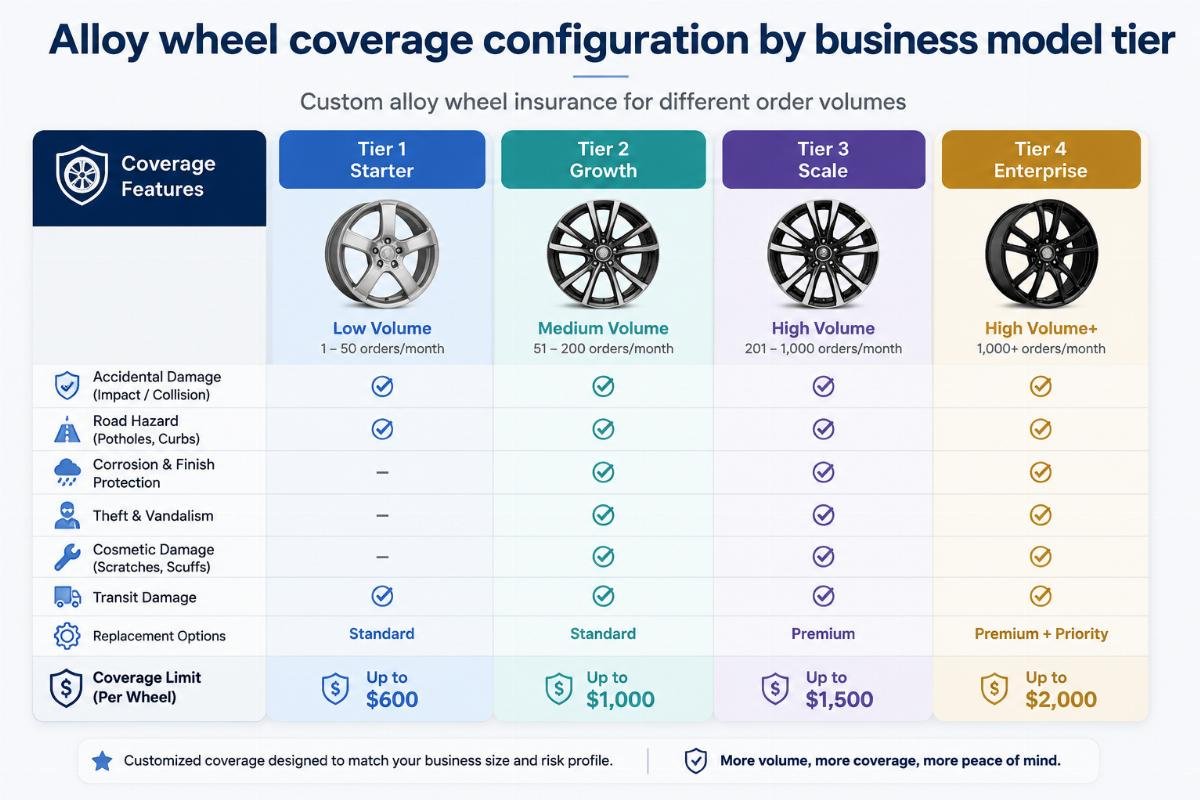
- Volume Tier Mapping – Categorize your operation by your standard monthly order bracket: <50 units, 50-500 units, 500-5,000 units, or 5,000+ units
- Restock Pattern Alignment – Match your coverage period to how often you place orders and the average length of your shipment windows
- Warranty Sync – Align your policy terms with the 3-year structural warranty provided by your wheel supplier to eliminate overlapping coverage gaps
What cost optimization methods are there for alloy wheel insurance?
You do not have to accept a tradeoff between lower premiums and sufficient coverage. There are targeted adjustments you can make to cut annual premium costs without reducing the scope of coverage for the high-risk points that actually matter for alloy wheel operations. The single most impactful optimization comes from aligning your policy structure with the existing terms your supplier already provides.
| Optimization Approach | Common Inefficient Practice | High-Impact Adjustment |
|---|---|---|
| Premium Cost Control | Paying for redundant coverage for risks already covered by supplier warranty | Bundle policy with supplier after-sales warranty terms to cut annual premium by 25% [NEED_CITE: Bundling coverage with supplier’s after-sales warranty terms can reduce annual insurance premium by 25% without reducing coverage scope] |
| Scope Prioritization | Paying for broad low-risk perils that never impact alloy wheel operations | Limit policy to only cover product liability, transit, and storage, cutting unnecessary add-ons |
| Batch Adjustment | Locking in fixed coverage limits regardless of order size | Adjust coverage tiers dynamically to match your monthly order volume for each shipment cycle |
A Latin American OEM parts buyer processing 5,00
