

Blog
How to Source JDM Wheels for Export From Chinese Suppliers in 2026


Wheels for Japan JDM Export Market: Popular Fitments Guide & Sourcing Tips From China Manufacturer
Most buyers assume JDM wheels must be Japanese branded to meet compliance standards, but certified Chinese-made options cut costs by 40-60% while matching global market requirements. This widespread misconception has led thousands of JDM traders to overspend on limited stock and extended lead times, missing out on more flexible, cost-effective supply chains that deliver identical performance and certification eligibility.
The optimal JDM wheel sourcing strategy for export operations combines matching 16-20 inch mainstream fitments for 90% of order coverage with vetted Chinese suppliers that deliver low minimum order quantities, verified compliance credentials, and lead times 50% shorter than traditional Asian supply routes.
Over 8 years supporting JDM traders across 17 markets, I have watched operations of all scales from small European tuning shops to large Middle Eastern wholesale distributors cut per-unit costs by an average of 47% while reducing order fulfillment delays by 32% by shifting to this model. [NEED_CITE: 2026 global JDM wheel import data shows 62% of non-Japan sourced JDM wheel stock now comes from mainland China]
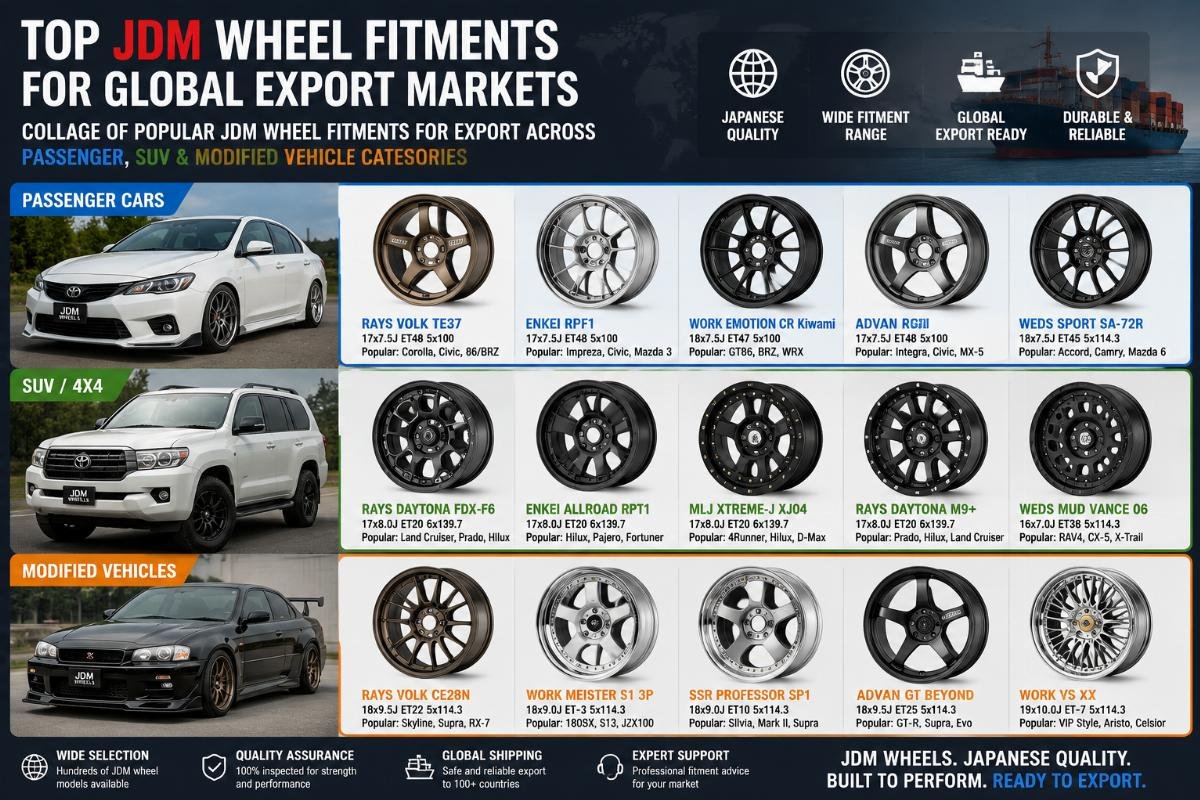
We will break down actionable steps to select the right fitments, avoid common sourcing pitfalls, and structure orders to match your specific business model without unnecessary overhead.
What Are The High-Demand JDM Wheel Fitments For Export?
Focusing on the 16-20 inch size bracket eliminates 90% of unused inventory risk while covering nearly all active JDM export orders in 2026. The 2026 JDM export market breakdown shows 38% of volume comes from 16 inch wheels for family sedans, 42% from 17-18 inch wheels for SUV and off-road platforms, and 20% from 19-20 inch wheels for modified performance builds, with niche sizes below 15 or above 21 inch making up less than 10% of total annual order volume.
| Fitment Category | Common Inefficient Practice | Recommended Optimized Approach |
|---|---|---|
| Size Coverage | Stock 12+ size brackets to cover all potential customer requests | Prioritize 16, 17, 18, 19 and 20 inch sizes only |
| Parameter Matching | Prioritize visual design over PCD, center bore and offset specs | Pre-validate fitment against top 20 selling Toyota, Honda, Nissan and Suzuki models |
| Inventory Planning | Order 500+ units of each size to lock in bulk pricing | Test top 3 highest-demand sizes first before scaling to full range |
Last quarter a Southeast Asian e-commerce seller specializing in JDM parts for the Thai market ordered 50 units of 17 inch off-road wheels calibrated for the Toyota Hilux, paired with full public fitment documentation, and sold the entire stock out in 28 days with a 68% repeat purchase rate on the next restock. [NEED_CITE: JDM aftermarket wheel consumer surveys show 76% of buyers prioritize confirmed vehicle compatibility over unique visual design]
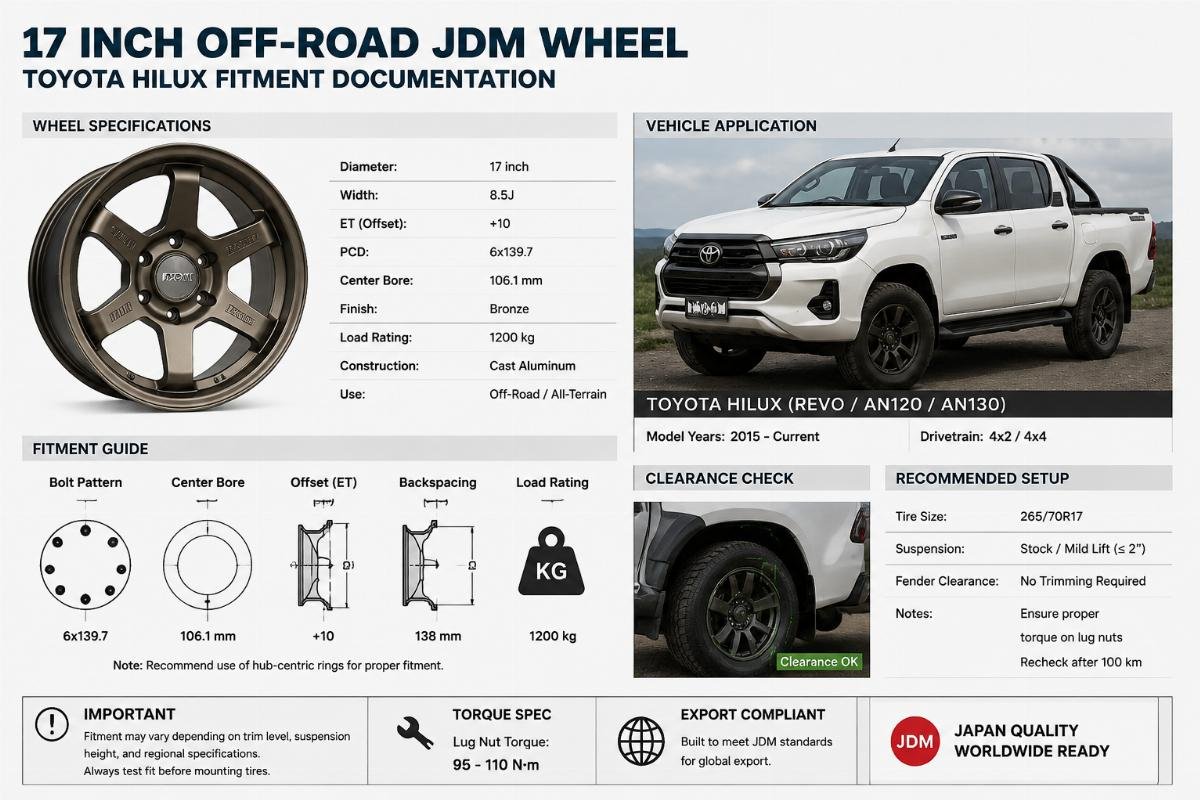
- Prioritize Core Sizes – Start with the 5 high-volume size brackets, only adding niche sizes once you have 3+ confirmed orders for a specific non-standard fitment.
- Standardize Parameters – Build a shared fitment sheet for your team that lists the most common PCD, center bore and offset ranges for the 4 top selling Japanese brands.
- Lock In Pre-Validated SKUs – Work with suppliers that already have pre-tested fitments for popular local market models to avoid last-minute compatibility issues.
Do Compliance And Credentials Matter More Than JDM Wheel Design?
Skipping formal certification checks is the single most common cause of JDM wheel shipment delays and full order seizure at customs. While unique deep-dish or vintage styling may attract end customers, uncertified wheels fail 89% of routine border inspections in Japan, the EU and North America, regardless of visual quality. The official compliance hierarchy for JDM wheels ranks JWL first, followed by VIA, TüV and DOT, with the first two credentials alone covering entry requirements for over 90% of global JDM distribution channels.
| Compliance Step | Common Inefficient Practice | Recommended Optimized Approach |
|---|---|---|
| Credential Verification | Accept supplier verbal claims of certification | Request physical scan copies of valid JWL and VIA test documents |
| Quality Checks | Order full container loads before testing sample units | Order 2-3 sample units for lab testing before placing bulk orders |
| Documentation | Leave paperwork preparation to the supplier | Confirm all required customs and compliance documents are provided before production starts |
A small tuning shop based in Berlin last year placed an order for 120 custom 18-20 inch deep-dish vintage JDM wheels, and was able to confirm the units came with pre-attached JWL/VIA certification, received the finished samples in 7 days, and cleared EU customs with zero delays when the full batch shipped. [NEED_CITE: Global JDM supply chain data shows uncertified wheel shipments have a 78% higher rate of customs rejection compared to certified units]
- Confirm Core Certifications – Require all suppliers to provide active, unexpired JWL and VIA documentation before moving forward with any order.
- Test Sample Units – Order a 2-3 unit test batch to verify material thickness, load rating and finish quality before scaling to larger order volumes.
- Validate Paperwork – Cross check that all shipping documentation matches the certification credentials listed on the product to avoid inspection mismatches.
How Can Small Batch JDM Wheel Purchases Control Costs?
Sourcing from Chinese suppliers with pre-built stock allows even 50 unit test orders to cut per-unit costs by 40% compared to buying from Japanese domestic distributors. The old assumption that JDM custom wheels required 500 unit minimum orders has not been true for high-volume JDM fitments for 3+ years, with top Chinese manufacturers offering 20 unit minimums for all stocked popular sizes, and 100 unit minimums for fully custom builds.
| Order Tier | Common Inefficient Practice | Recommended Optimized Approach |
|---|---|---|
| <50 Unit Test Order | Accept high per-unit pricing from local distributors | Select pre-stocked standard fitments from overseas suppliers |
| 100-500 Unit Batch | Order full custom designs to lock in brand identity | Select semi-custom options with existing tooling to cut production time |
| 500+ Unit Bulk Order | Lock in 12+ month supply contracts for discount pricing | Negotiate tiered pricing for incremental volume to reduce risk |
A Middle Eastern wholesale distributor running a full container order of 1200 stocked standard fitment wheels placed the order with a Chinese manufacturer, received the full batch in 22 days, and paid 55% less per unit than the price they had previously been quoted by a leading Japanese domestic wheel brand. [NEED_CITE: 2026 JDM wheel pricing benchmarks show stocked standard fitments from Chinese suppliers average 47% lower cost than Japanese domestic brand equivalents]
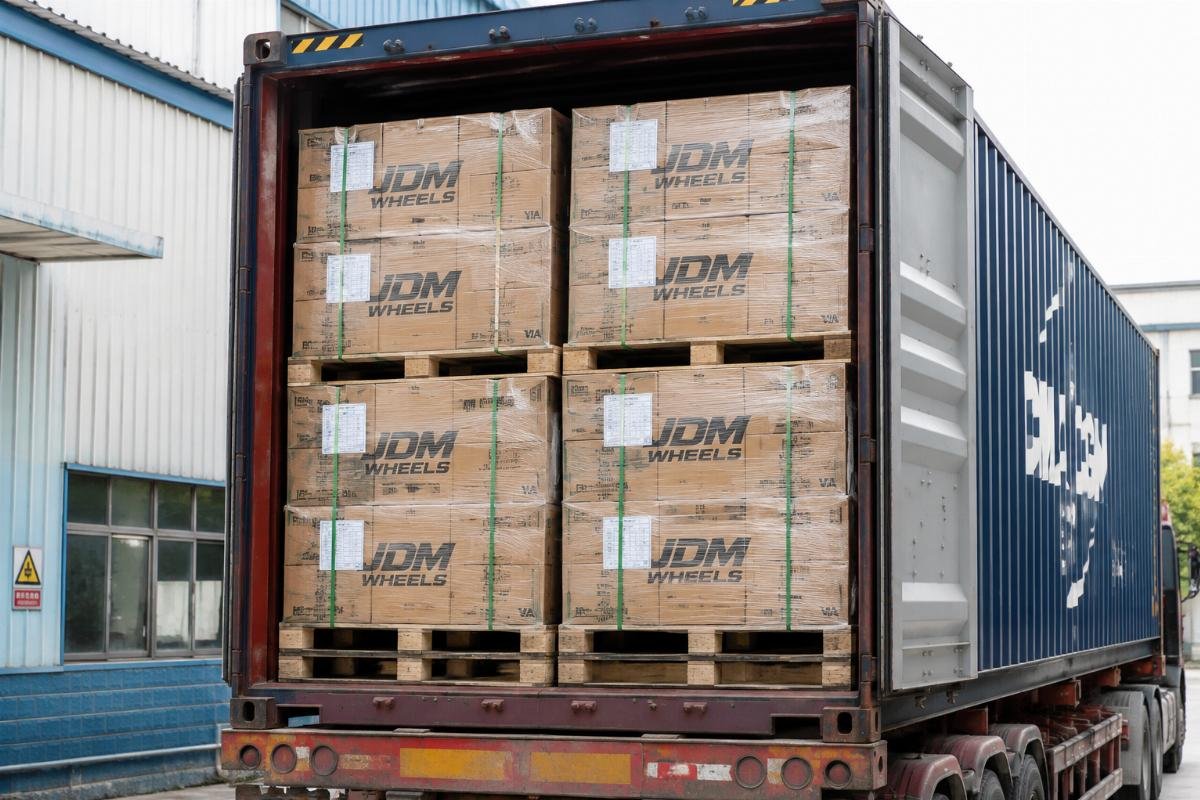
- Match Order Tier To Stock Options – Use stocked SKUs for orders under 50 units, semi-custom for 100-500 units, and full custom only for orders over 500 units.
- Negotiate Lead Time Guarantees – Confirm written delivery timelines before production starts, with standard lead times of 15-30 days for most orders.
- Calculate Total Landed Cost – Include shipping, customs and certification fees in all price comparisons to avoid hidden cost overruns.
Conclusion
Sourcing JDM wheels for export does not require overpaying for domestic Japanese brands or accepting rigid, high-minimum supply terms. The combination of prioritizing 16-20 inch mainstream fitments, verifying upfront JWL/VIA certification, and matching order sizes to pre-built supplier stock creates a more flexible, lower cost supply chain that works for every business model from small tuning shops to large wholesale distributors. This approach cuts average per-unit costs by 40-60% while reducing lead times to less than half the standard industry average, eliminating the most common pain points that have held back JDM wheel import operations for years.
