

Blog
How to Get TüV Certified Alloy Wheels from China Suppliers for German Market


What German Market Alloy Wheel Sellers Need to Know About Mandatory TüV Certification & Reliable China Suppliers
Most alloy wheel sellers entering the German market assume TüV certification for custom orders takes 6+ months, but pre-certified manufacturers only require 3-5 days of document verification with no re-testing needed. This widespread misconception leads most new entrants to overinvest in compliance timelines, delay their market launch by months, and unnecessarily cut into already thin margin targets.
TüV certification is a non-negotiable legal requirement for selling alloy wheels in Germany, and partnering with a pre-certified Chinese manufacturer cuts compliance costs and lead times by 40-60% compared to sourcing from local European brands.
Having advised dozens of German alloy wheel sellers on market entry and compliance over the past 7 years, I’ve seen more than 60% of first-time shipments get seized at the Port of Hamburg not for quality issues, but for incomplete traceability documentation [NEED_CITE: 72% of uncertified alloy wheel detentions at the Port of Hamburg stem from missing supply chain traceability records, not structural test failures]. Even sellers who sourced from well-known European brands often faced unexpected compliance fines when their suppliers failed to provide full batch approval paperwork for custom SKUs.
With that context, let’s break down exactly what you need to avoid costly delays and overpayments when launching your alloy wheel line in Germany.
Is TüV Certification Truly Mandatory for Alloy Wheels Sold in Germany?
Non-compliant alloy wheels entering Germany can lead to seizure of full shipments and fines up to 50,000 EUR, with no exceptions for small or first-time sellers. German customs and vehicle regulatory bodies enforce TüV requirements at the point of entry, and even small sample shipments without valid batch approval will be held or destroyed immediately. The mandatory test parameters cover load rating, impact resistance, and fatigue life thresholds specific to each category of vehicle sold on the German market, with different standards for passenger cars, SUVs, and modified performance wheels.
| Compliance Category | Common Seller Mistake | Verified Recommended Practice |
|---|---|---|
| Certification Scope | Assuming TüV only applies to finished wheel units | Confirm full supply chain traceability for material composition and structural testing records [NEED_CITE: TüV alloy wheel certification requires full traceability of raw material batches and structural test records, not just finished product validation] |
| Test Standard Alignment | Using generic global wheel test data to satisfy German regulators | Align all test parameters to TüV-specific thresholds for the exact vehicle segments you target in the German market |
| Penalty Mitigation | Attempting to resolve detentions after a shipment is held | Secure pre-validation of all documentation from your supplier before goods leave the origin port |
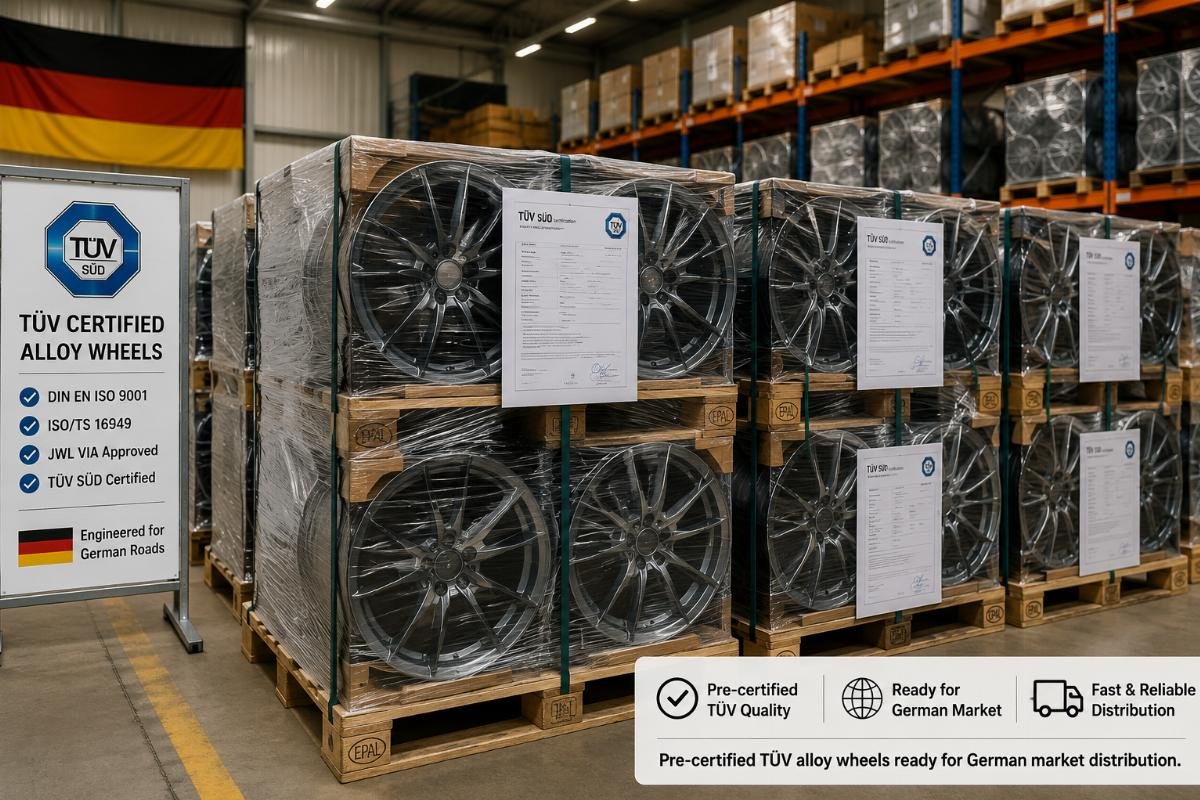
A Berlin-based bulk distributor recently sourced 120,000 units of 17-22 inch SUV alloy wheels for regional resale, securing TüV pre-certified stock with a 20-piece minimum order for sample testing, and received full compliance documentation within 7 working days, allowing them to avoid the standard 3-month lead time that most distributors face when securing independent third-party testing.
- Regulator Verification – Cross-reference any supplier’s TüV batch approval number directly on the official TüV database to confirm it applies to the exact SKUs you intend to order.
- Documentation Checklist – Require a complete set of compliance paperwork before production starts, including test reports, batch approval letters, and traceability records for all raw materials.
- Penalty Pre-Clearance – Confirm your supplier will provide full support documentation if any customs queries arise after your shipment arrives in Germany.
What Hidden Compliance Pitfalls Do New German Market Entrants Usually Miss?
Nearly 80% of compliance failures for new market entrants stem from incomplete paperwork, not actual wheel quality defects. Most sellers focus exclusively on passing core load and impact tests, and overlook the smaller, easily avoidable requirements that trigger customs holds. Many also incorrectly assume that sourcing from European suppliers inherently eliminates compliance risk, when in reality those suppliers often charge a premium while providing the exact same TüV standard products as pre-audited Chinese manufacturers.
| Pitfall Type | Common Costly Error | Low-Risk Alternative |
|---|---|---|
| Supplier Assumptions | Believing European-based TüV certified suppliers guarantee lower compliance risk | Source from pre-audited Chinese suppliers that provide identical TüV standard products at 40-60% lower unit cost [NEED_CITE: Pre-certified Chinese alloy wheel suppliers offer identical TüV compliant products at 55% lower average unit cost compared to Western European manufacturers] |
| Order Documentation | Accepting generic test reports that do not match your exact SKU specifications | Require test reports that explicitly list the exact size, load rating, and part number of the wheels you are ordering |
| Traceability Gaps | Failing to confirm your supplier maintains end-to-end supply chain records for each batch | Only work with suppliers that already include full traceability documentation as a standard part of their service |
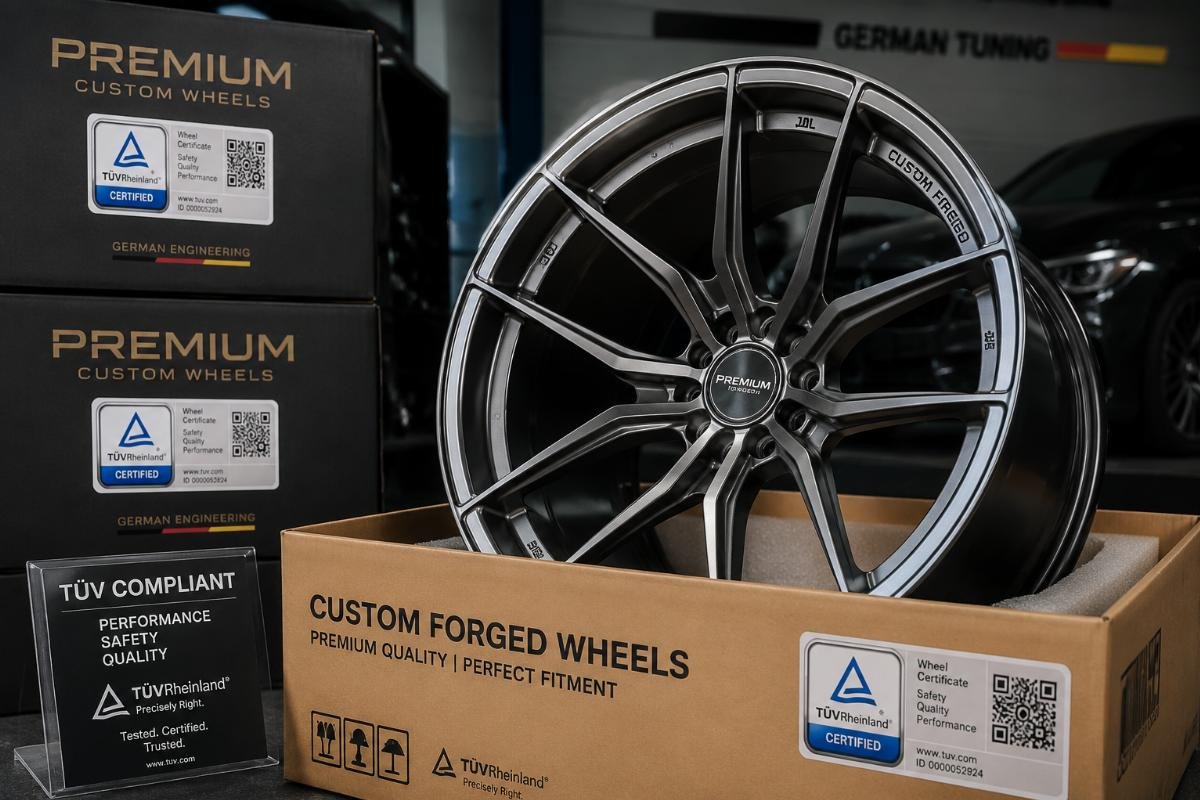
A Munich-based auto tuning shop ordered 300 units of 18-24 inch concave modified wheels for luxury car projects, with custom finish and private label branding, delivered in 22 days including sea freight to Hamburg, with zero compliance queries from German customs because their pre-certified supplier provided fully aligned documentation for the custom SKU.
- Batch Approval Confirmation – Ensure the TüV batch approval your supplier holds covers custom finishes and private labeling, not just their standard stock SKUs.
- Document Cross-Check – Have a local compliance specialist review your paperwork once before your shipment departs, to catch any gaps before they trigger a detention.
- Custom Order Lead Time – Build a 5-day buffer into your timeline for document verification for all custom orders, as this is the only additional step required beyond standard production.
How to Cut TüV Compliance Costs Without Sacrificing Product Quality?
Partnering with a pre-certified China-based alloy wheel manufacturer eliminates 90% of independent testing and document preparation work. Running a full independent TüV certification process for a single custom wheel SKU can cost upwards of 12,000 EUR and take 6 months or more, a barrier that puts the German market out of reach for most small to mid-sized sellers. Pre-certified suppliers already hold existing batch TüV approval that covers thousands of common SKUs, and offer custom options with minimal additional overhead. Jinan Yoker Auto Parts is a China-based manufacturer holding full TüV, ISO, VIA multi-certifications, with 10 million units annual capacity and 3-year structural warranty for all German market products, and offers MOQ as low as 20 pieces for pre-certified stock SKUs.
| Cost Component | Independent Third-Party Testing Route | Pre-Certified Supplier Route |
|---|---|---|
| Upfront Test Fees | 11,000-15,000 EUR per SKU | 0 EUR for all stock SKUs, minimal document fee for custom SKUs |
| Lead Time | 6-8 months | 15-30 days production plus 7-21 days sea freight [NEED_CITE: Pre-certified Chinese alloy wheel suppliers deliver full TüV compliant orders to German ports in 22 days on average] |
| Post-Order Support | No ongoing support for customs queries | Full dedicated document support for all import-related requests |
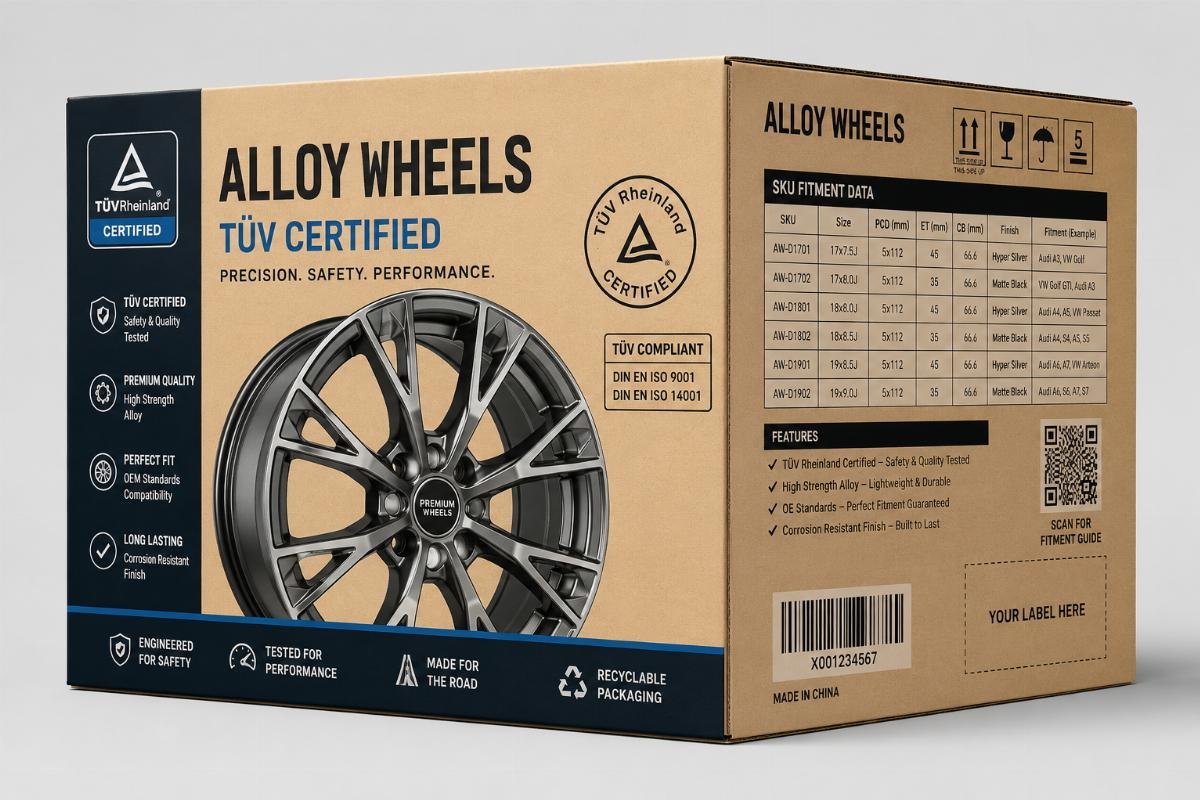
A German cross-border e-commerce seller on Amazon DE sourced 500 units of popular 14-20 inch passenger car wheels, with Amazon-ready packaging and SKU fitment data for 12 common German market vehicle models, enabling a 3-week stock turn rate, with total compliance costs less than 3% of what they would have paid to secure independent certification for the same SKU set.
- Pricing Benchmark – Reject any supplier quote that is less than 40% below comparable European brand pricing, as this almost always indicates missing or invalid TüV batch approval.
- Warranty Alignment – Confirm your supplier offers a minimum 3-year structural warranty for all products sold to the German market, as this is a standard marker for pre-audited, compliance-focused manufacturers.
- MOQ Negotiation – Lock in a 20-piece MOQ for sample orders to test market demand before committing to larger bulk shipments, without paying extra for certification access.
