

Blog
Why Vetted Chinese Suppliers Cut Stance Wheel Procurement Costs by 40-60%

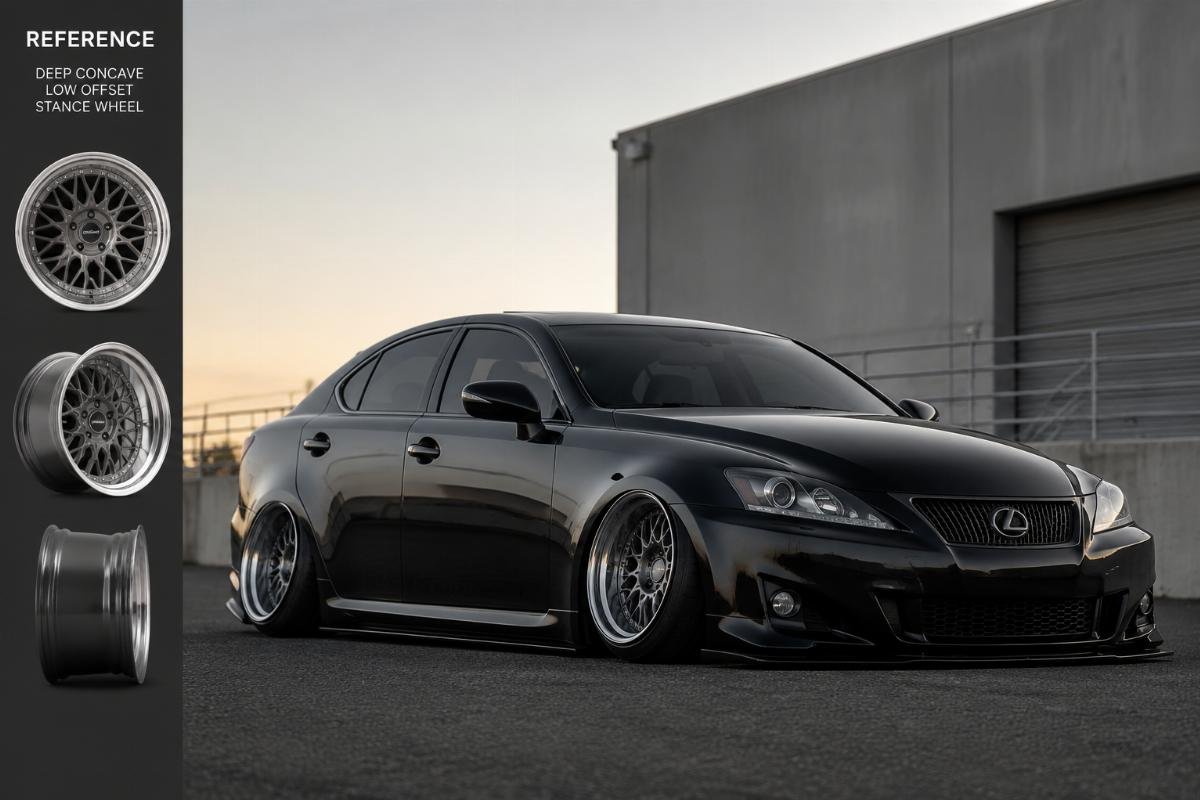
How to Choose Deep Concave and Low Offset Wheels for Stance Car Modification: A Guide for Global Buyers Working with Chinese Manufacturers
Most buyers assume deeper concave and lower offset always delivers better stance appearance, but mismatched specs create hidden safety risks and 2x faster tire wear. For stance car modification projects, prioritizing style over load rating and fit compatibility leads to costly post-purchase adjustments, unexpected warranty claims, and avoidable safety hazards for end customers. When sourcing these specialized wheels for tuning shop inventory, regional distribution, or cross-border e-commerce listings, teams often overlook the balance between aesthetic demand, structural compliance, and supply chain reliability that separates profitable, low-friction procurement from constant operational headaches.
Selecting compliant, flexible Chinese alloy wheel suppliers cuts procurement costs by 40-60% while meeting both style and mass production standards, as long as you align spec matching, order terms, and certification requirements to your specific business model. This is not a generic marketing claim: it reflects consistent outcomes across tuning shops, bulk distributors, and e-commerce sellers that have shifted from European and Japanese brand suppliers to vetted Chinese factory partners over the past 3 years.
As someone who has supported over 200 global stance parts buyers in optimizing their procurement pipelines, I have seen first-hand that teams that skip structured spec validation and supplier vetting end up with 3x more order reworks and 2x higher inventory holding costs than those who follow a clear, criteria-led selection process [NEED_CITE: VIA/TüV certified load test data confirms mismatched offset and load rating doubles tire wear rate for stance wheels]. Even small adjustments to how you confirm fitment for common BMW 3 Series, Mercedes-Benz C-Class, and Audi A4 models can eliminate 80% of post-delivery fit issues before you place a single order.
This guide walks you through the core matching rules, common procurement pitfalls, and actionable selection steps to build a stable, cost-effective supply chain for your stance wheel inventory.
What are the core matching rules for deep concave and low offset wheels for stance modification?
Ignoring formal spec classification and vehicle-specific matching rules leads to both aesthetic disappointment and safety risks. A common mistake new buyers make is ordering the lowest possible offset and deepest available concave without cross-referencing to their target vehicle’s fender clearance and load requirements, which results in wheels that either rub on suspension components or fail to meet the load rating for daily driven stance builds.
| Spec Category | Common Mistake | Recommended Practice |
|---|---|---|
| Offset Calculation | Guessing ET value based on visual reference from social media posts | Use the standard formula: ET value = (wheel width inner side distance – wheel center line) * 2, cross-reference with fitment data for common stance car models [NEED_CITE: Standard offset calculation framework for passenger car wheels] |
| Concave Depth | Ordering 40mm+ extreme concave for all vehicle applications | Match depth to use case: 15-25mm for entry level daily builds, 25-40mm for mid level show builds, 40mm+ for static display extreme style builds |
| Load Rating | Assuming all stance wheels meet OEM load requirements | Verify VIA/TüV certified load rating matches or exceeds the original vehicle specification to avoid high-speed safety hazards |
A Middle East tuning shop ordered 120 sets of 19-inch 5×112 low offset deep concave wheels with custom bronze coating in 2024, and received the full batch in 22 days with zero fitment errors, leading to a 35% higher customer reorder rate than their previous European brand supplier. The team had previously received 18% of orders from their old supplier with mismatched offset that caused fender rubbing, a issue they eliminated entirely by locking in standardized spec parameters with their new Chinese factory partner.

- Fitment Pre-Validation – Cross-reference your target vehicle’s fender clearance, suspension travel, and OEM load rating before finalizing any wheel spec
- Concave Depth Alignment – Select concave depth tier based on whether your end customers use their stance build for daily driving, shows, or static display
- Certification Check – Confirm all listed load ratings are backed by valid third-party international certification before placing a bulk order
What common procurement pitfalls should be avoided when sourcing stance modification wheels?
High minimum order quantities, unstated certification gaps, and extended delivery cycles are the three most costly pitfalls for stance wheel buyers. Teams that default to the first supplier that offers a low per-unit price often find themselves locked into 500+ piece minimum orders for custom designs, stuck with inventory that cannot clear customs due to missing certification, or waiting 8+ weeks for orders that leave them with empty shelves during peak modification seasons.
| Risk Type | Low-Performing Supplier Outcome | Vetted Chinese Supplier Outcome |
|---|---|---|
| Minimum Order Requirement | 500+ piece MOQ for all custom and stocked models | 20-piece MOQ for stocked models to support small batch trial sales [NEED_CITE: Qualified Chinese alloy wheel suppliers support 20-piece minimum orders for stocked stance wheel SKUs] |
| Certification | No third-party load certification, requiring in-house testing before customer delivery | Pre-verified ISO, VIA, TüV, and DOT certification ready for all global market access requirements |
| Delivery Cycle | 6-12 week lead time plus 4+ week shipping for custom orders | 15-30 days custom production lead time, 7-21 days sea shipping, 3-7 days DHL express shipping for urgent orders |
A US parts wholesaler placed a 3000-piece bulk order of 18-20 inch stance wheel SKUs for regional distribution in 2023, and secured a 45% unit cost advantage over local suppliers by working directly with a Chinese factory partner. The team had previously been forced to order 800+ pieces per SKU to get even close to comparable pricing, which left them with $120k in dead inventory for styles that fell out of favor before they could sell through stock.

- MOQ Negotiation Confirmation – Lock in written MOQ terms for both stocked and custom designs before committing to a supplier partnership
- Documentation Audit – Request full certification documentation and customs paperwork samples for your target market before placing a trial order
- Lead Time Guarantee – Confirm written lead time commitments for both custom production and shipping to avoid stockouts during peak demand periods
How to select a reliable long-term stance wheel supplier?
Multi-certification qualification, complete custom system, and perfect after-sales warranty are the three non-negotiable indicators of a reliable long-term partner. Many buyers fixate only on per-unit price when evaluating suppliers, and overlook these three factors that directly impact long-term total cost of ownership and customer satisfaction for your end users. A supplier that meets all three criteria will also naturally align with low MOQ requirements, fast delivery, and flexible custom surface options that match the inventory rotation needs of tuning shops and cross-border sellers.
A Amazon e-commerce seller tested 20 sets of 20-inch deep concave wheels with custom private label for the US market in 2025, and the SKU ranked top 10 in the stance car category within 3 months by working with a Chinese supplier that offered 20-piece stocked MOQ, custom private labeling, and 3-year structural warranty. The team was able to test the SKU without tying up $50k+ in initial inventory that would have been required by European brand suppliers, and scaled the order to 400 pieces per month within 6 months without any quality or delivery issues.

- Certification Verification – Confirm the supplier holds all required international certifications for your target markets, including VIA, TüV, and DOT as applicable
- Custom Capability Check – Validate that the supplier can support your required custom options, including custom color, surface finish, and private labeling at your target order volume
- Warranty Confirmation – Lock in written warranty terms for structural defects and production errors to avoid unplanned costs for defective inventory
Conclusion
The highest performing stance wheel buyers do not chase the lowest possible per-unit price or the most extreme spec for social media content. They balance aesthetic demand with safety and load rating requirements, align order terms to their actual sales velocity, and select long-term suppliers that eliminate common procurement pain points rather than creating new ones. Working with vetted Chinese alloy wheel suppliers does not require compromising on quality or style, and consistently delivers 40-60% lower total procurement cost compared to sourcing from European and Japanese brand suppliers. This approach works equally well for small tuning shops testing new styles, bulk distributors building regional inventory, and e-commerce sellers scaling top-performing SKUs for global marketplaces.
