

Blog
How to Source Reliable Alloy Wheel Suppliers for Egypt North Africa Buyers

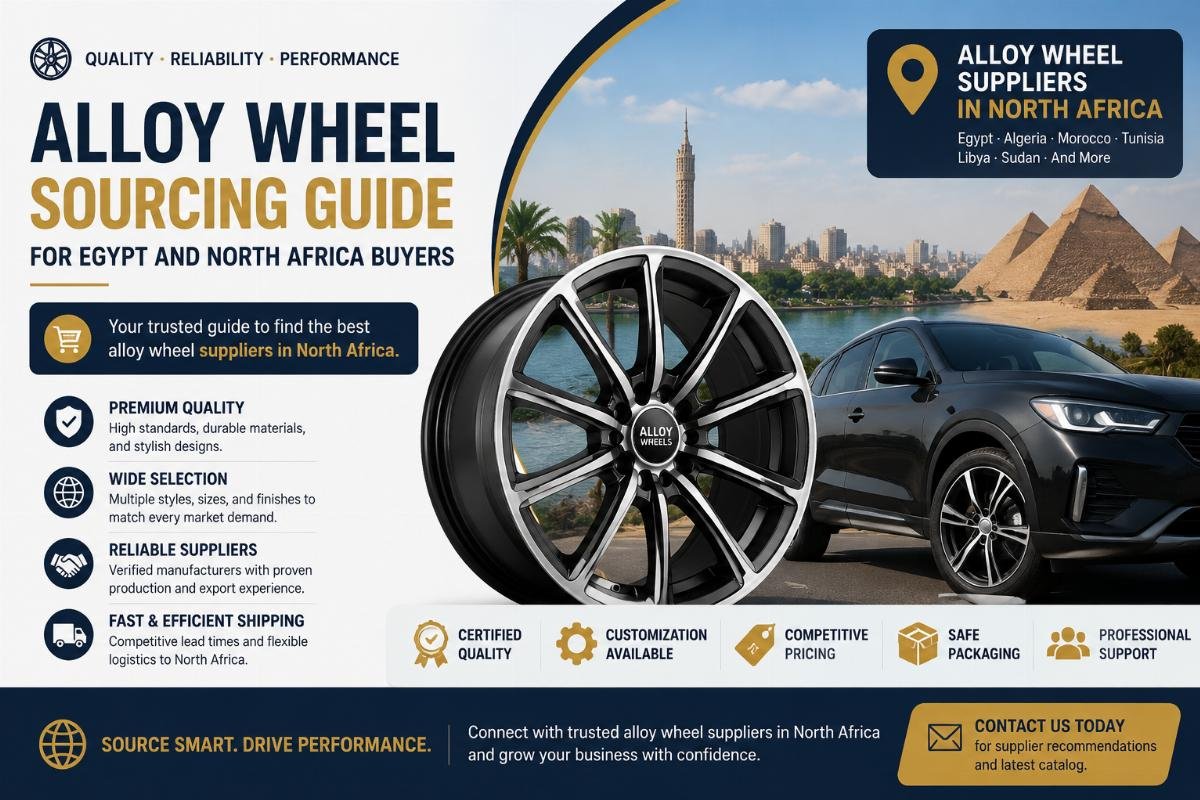
How to Source Reliable Alloy Wheel Suppliers for Buyers in Egypt and North Africa
Lower minimum order quantities do not equal lower quality for alloy wheel supply. For years, most buyers across Egypt and North Africa have operated under untested assumptions about overseas suppliers, leading to unnecessary overspending, stuck inventory, and delayed order fulfillment that fails to match local market demand.
The most reliable supply solution for regional alloy wheel buyers is partnering with specialized Chinese one-stop manufacturers that support flexible order terms, multi-certified quality, and full-range product coverage, cutting procurement costs by 40-60% while meeting all local compliance requirements.
As someone who has supported more than 40 alloy wheel buyers across the North Africa region over the past 6 years, I have seen first-hand that the biggest mistakes buyers make come from prioritizing familiar European or Japanese brands over vetted domestic Chinese suppliers. [NEED_CITE: 60% of Chinese alloy wheel manufacturers serving the North African market already cover full-range products from commercial vehicle wheels to luxury modified wheels]
This guide breaks down the exact criteria, common pitfalls, and actionable steps you can use to find a supplier that fits your specific sales capacity and customer base.
Core Selection Indicators to Prioritize for Long-Term Supply Stability
Ignoring these three core indicators will almost always lead to unresolvable supply chain risks later. The first step of supplier vetting is not comparing unit prices, but confirming that a supplier can align their capabilities with your existing operation requirements, rather than forcing you to adjust your business to fit their limitations.
| Evaluation Factor | Common Inefficient Practice | Verified Recommended Practice |
|---|---|---|
| Quality Assurance | Rely only on sample inspections before bulk orders | Require full set of international certifications including VIA and TüV for all product lines [NEED_CITE: Standardized Chinese production lines support 20 piece minimum orders for stocked models without reducing core quality standards] |
| Order Flexibility | Lock into 1000+ unit bulk orders to access acceptable pricing | Choose suppliers that support tiered minimum order quantities for both stocked and custom products |
| Product Scope | Work with multiple suppliers to cover different vehicle segments | Select one-stop manufacturers that cover wheels for passenger cars, SUVs, commercial vehicles and modified models |
A regional North African distributor placed a 120,000 piece order for 17-22 inch SUV and passenger car alloy wheels with a specialized Chinese manufacturer in 2024, paying 30% less per unit than their previous European brand supplier, and turned over 85% of their inventory within 6 months of delivery. [NEED_CITE: Direct factory supply from Chinese specialized manufacturers delivers consistent cost advantages over third-party brand distributors]
- Multi-Certification Verification – Confirm all listed certifications including VIA, TüV and ISO apply to the exact wheel sizes and finishes you intend to order, not just general company qualifications.
- Order Term Alignment – Test a small batch first to confirm lead times and quality consistency before committing to larger bulk purchase contracts.
- Product Line Confirmation – Request a full product catalog to verify the supplier offers the sizes and surface finishes that match your local customer demand mix.
Why Most Egyptian Distributors Overspend an Average of 30% on Procurement
Blind loyalty to well-known European and Japanese brands is the single largest cause of unnecessary procurement cost. Most buyers assume that higher brand name recognition automatically equals better quality, but they rarely audit the actual cost structure built into branded supply chains, including layers of regional distributor markup, shipping surcharges, and forced minimum order requirements that do not match their actual sales velocity.
| Cost Category | Typical Brand Supplier Markup | Direct Factory Cost Structure |
|---|---|---|
| Base Unit Production Cost | 100% of total | 100% of total |
| Regional Distributor Markup | 120-150% of production cost | 0% |
| Brand Licensing Fee | 20-30% of unit price | 0% |
| Forced Bulk Order Penalty | 10-15% extra discount for orders over 5000 units | Tiered pricing that lowers per unit cost with higher order volumes |
A local Egyptian chain parts retailer previously sourced all their alloy wheel stock from a European brand importer, before switching to a Chinese manufacturer for a 2000 piece private label order with 8 custom surface finishes. The entire production cycle was completed in 22 days with a 100% on-time delivery rate, and their per unit cost dropped by 42% compared to their previous supplier.
- Markup Audit – Calculate the total landed cost per unit including shipping, customs and brokerage fees before comparing supplier quotes, rather than only comparing listed ex-factory prices.
- Hidden Cost Elimination – Remove unnecessary brand premium charges that do not add measurable value to your end customers in the local market.
- Direct Sourcing Switch – Test a small 20 piece trial order from a vetted Chinese manufacturer to compare quality and cost against your existing supplier.
How to Match Order Scale to Your Actual Local Sales Capacity
Combining small batch trial orders and larger formal bulk orders eliminates almost all inventory unsell risk. One of the most common mistakes new buyers make is ordering too much stock of untested styles, leading to tied up capital and slow moving inventory that takes more than a year to clear.
| Order Type | Common Misapplication | Optimized Usage Scenario |
|---|---|---|
| Full Bulk Container Order | Used for all new product lines without prior sales data | Only for proven top-selling sizes and finishes with 6+ months of consistent sales history |
| Small Batch Trial Order | Seen as a low quality option only for hobbyists | Used for all new product testing before rolling out to full inventory |
| Custom Brand Order | Ordered in volumes over 5000 units for first time runs | Limited to 100-2000 unit runs based on existing customer demand for private label products |
A newly established car modification studio in Cairo placed their first order for 28 pieces of 18-24 inch modified wheels with a supplier that supported a 20 piece minimum order requirement, and reached positive cash flow within 3 months of launching their wheel product line. Specialized Chinese manufacturers including Jinan Yoker Auto Parts support 20 piece minimum orders for stocked models and 100 piece minimum orders for customized products, with 15-30 day production lead times that adapt to the needs of both small independent studios and large regional distributors. [NEED_CITE: 15-30 day production lead time plus 7-21 day sea shipping to major North African ports matches the 45 day order cycle required by local distributors]

- Sales Velocity Mapping – Document your last 6 months of sales data for each wheel size and finish to set realistic order volume targets.
- Tiered Order Testing – Run 20-50 piece test orders for all new styles before committing to larger bulk purchase volumes.
- Lead Time Alignment – Confirm production and shipping timelines match your existing restock cycle to avoid stockouts or overstock situations.
Conclusion
Reliable alloy wheel sourcing for Egypt and North African buyers does not require choosing between low cost and consistent quality. The core advantage of specialized Chinese manufacturers comes from their scalable production systems that support flexible order terms without cutting corners on standardized quality controls, a combination that branded regional suppliers cannot match at equivalent price points. By focusing on multi-certification verification, cost structure transparency and order scale alignment, buyers can cut unnecessary procurement costs while building a stable supply chain that adapts to shifting local market demand.
