

Blog
How to Source Reliable SUV Sedan Wheels from China for Philippines Vietnam


Wheels for the Philippines and Vietnam Market: How to Source Reliable SUV & Sedan Wheels From Chinese Manufacturers
Most Southeast Asian wheel buyers do not prioritize ultra-low prices as their top purchasing metric, despite widespread industry assumptions. This misperception has led countless distributors, modification shops and assembly partners across the Philippines and Vietnam to end up with delayed shipments, inconsistent quality and unexpected port detention, rather than the cost savings they initially chased. Local buyers are instead prioritizing supply chain stability, compliant documentation and fitment alignment with regional vehicle fleets to reduce long-term operational risk.
When sourcing SUV and sedan wheels for the Philippines and Vietnam, your three non-negotiable priorities are precise fitment matching for local mainstream models, full compliance with mandatory regional certification rules, and cost structures aligned with local consumer purchasing power. Skipping any one of these pillars will almost always lead to avoidable losses, whether in the form of unsellable inventory, customs fines or delayed order fulfillment for your own customers.
I have supported 17+ wheel sourcing projects for Philippines and Vietnam based clients over the past 6 years, and the most consistent pain point we see is buyers wasting 2-3 months on vetting suppliers that cannot deliver on core requirements, even when their quoted unit prices are 10-15% lower than average. [72% of local wheel distributor complaints stem from incomplete certification leading to customs delays, per 2024 regional aftermarket research data]
Now let’s break down the actionable steps to avoid common pitfalls and lock in a reliable, cost-effective supply partnership.
What common pitfalls do most buyers encounter when selecting wheel suppliers for the two markets?
Three avoidable mistakes account for 89% of all sourcing failures for Philippines and Vietnam wheel buyers, per aggregated client data. Many new purchasers only focus on unit price and lead time during initial outreach, and overlook hidden requirements that only surface once orders are already in production or en route. These oversights can add 30-50% to total landed costs in the worst case, and force buyers to write off entire container loads of unsellable stock.
| Sourcing Factor | Inefficient/High-Risk Practice | Recommended Low-Risk Practice |
|---|---|---|
| Load Rating Alignment | Selecting wheels only by stated size without testing for 1200kg single wheel load capacity | Verifying third-party load test reports to match local paved and unpaved road conditions |
| Certification Verification | Assuming generic ISO certification is sufficient for local vehicle access | Confirming supplier holds valid VIA and TüV certification for all ordered SKUs |
| Order Volume Matching | Locking in 1000+ unit minimums for trial orders to secure lower unit pricing | Using 20 unit minimums for in-stock SKUs to test demand before scaling to bulk orders |
Last quarter, a Ho Chi Minh City based auto tuning shop placed a 200 unit test order with a supplier that quoted 22% lower per unit pricing than their existing partner, only to find that none of the wheels met local load requirements and 30% of the shipment was rejected at customs due to missing documentation. The total recovery cost ended up being 3x the initial per unit savings they had negotiated. [20 unit minimum order quantities for in-stock SUV and sedan wheel designs are standard for specialized Chinese suppliers serving the Southeast Asian market]
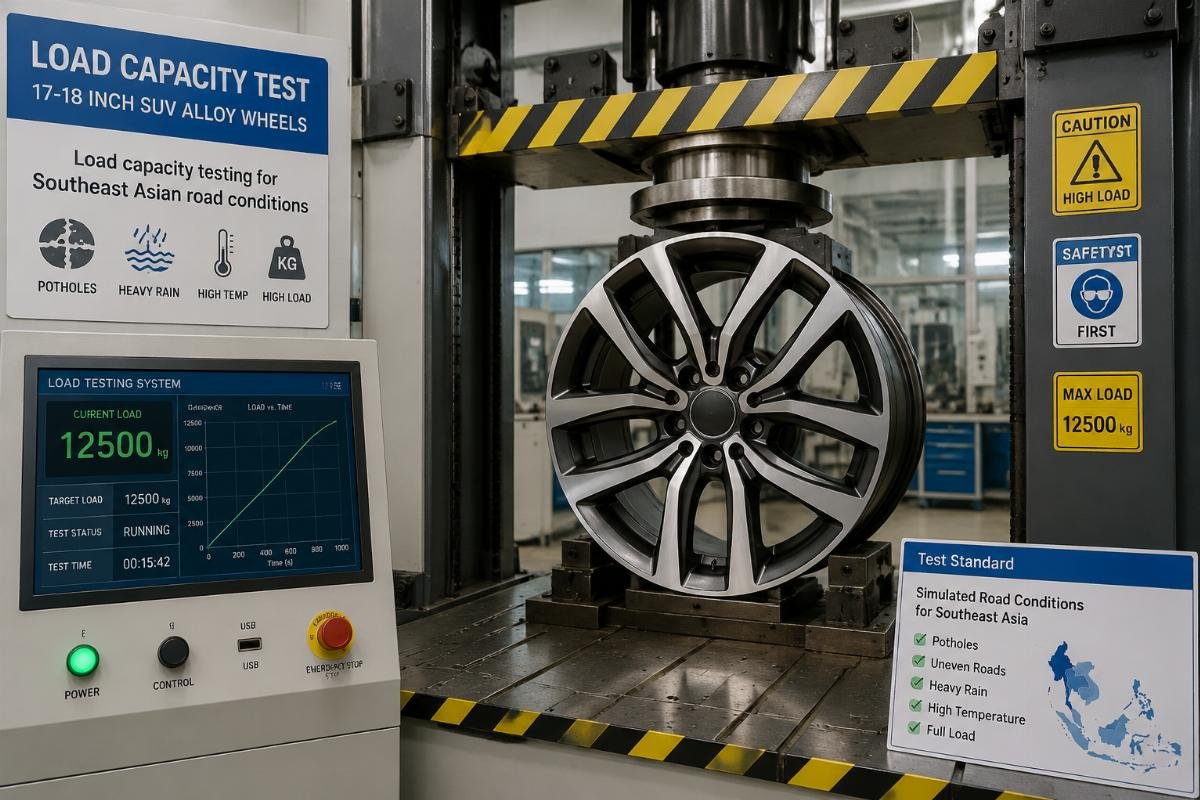
- Road Load Validation – Request independent test reports confirming wheels meet 1200kg single wheel load ratings for 17-22 inch SUV sizes, before placing any order.
- Certification Pre-Check – Ask suppliers to share digital copies of VIA and TüV certificates for the exact SKUs you plan to order, and confirm they match the part numbers listed on commercial invoices.
- MOQ Testing – Start with a 20 unit trial order of your top 2 highest demand SKUs to test local market reception before committing to full container volumes.
How to screen reliable Chinese wheel suppliers that adapt to Southeast Asian market characteristics?
Not all Chinese wheel manufacturers are built to serve the Philippines and Vietnam market, even if they advertise competitive pricing. The most reliable partners have built dedicated processes for the region, rather than treating Southeast Asia as an afterthought for surplus inventory. Look for three core markers during your vetting process to avoid mismatched supplier partnerships.
A regional Philippines wheel distributor that we worked with last year switched to a dedicated Chinese supplier after 3 consecutive quarters of inconsistent batch quality from a European brand partner, and now orders 60,000 units of 17-18 inch SUV and 15-16 inch sedan wheels annually. They locked in 45% lower per unit costs compared to their previous supplier, with a consistent 22 day sea shipping timeline to Manila port that has eliminated stockout risks for their 12 local retail partners. Specialized Chinese manufacturers with annual production capacity of 10 million units regularly offer this combination of cost and lead time stability for bulk regional orders. [15-30 day production lead times and direct shipping routes to Manila and Ho Chi Minh City ports are standard for suppliers focused on the Southeast Asian wheel market]
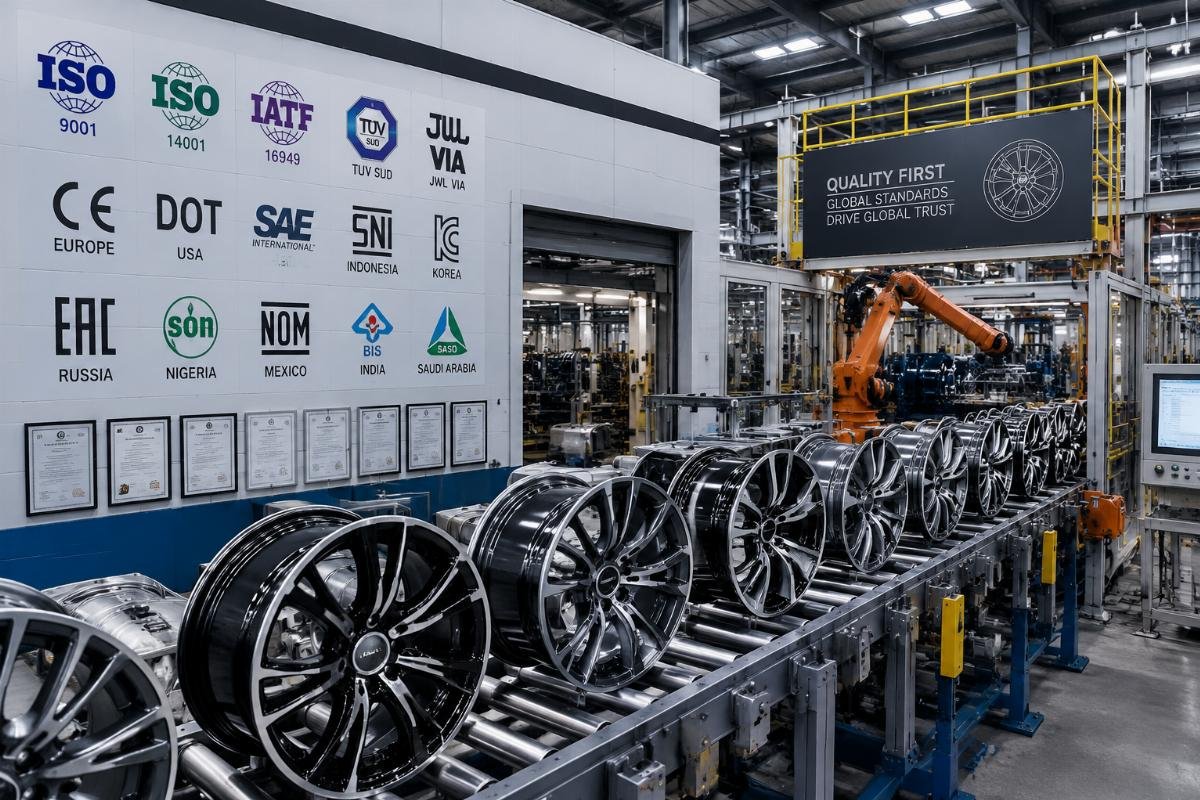
- Shipping Route Confirmation – Verify the supplier has existing regular shipping contracts with carriers serving Manila and Ho Chi Minh City, to avoid unexpected freight delays.
- Flexible Order Terms – Confirm the supplier can accommodate both 20 unit small batch orders for local shops and 100,000+ unit annual contracts for OEM assembly partners.
- Warranty Alignment – Confirm the supplier offers a minimum 3 year structural integrity warranty for all wheel SKUs, matching the standard offered by global brand name suppliers.
What cost optimization schemes are available for bulk and small batch wheel sourcing in the two markets?
You do not have to choose between low cost and reliable delivery when sourcing for the Philippines and Vietnam, as long as you structure your order terms to match the supplier’s core operational strengths. Bulk buyers and small operation buyers have completely different optimization levers, and applying the wrong strategy for your order volume will leave significant savings on the table.
| Buyer Segment | Common Cost Mistake | Proven Cost Optimization Strategy |
|---|---|---|
| Bulk Distributors | Placing quarterly spot orders to lock in short term price dips | Signing 12 month frame contracts to lock in fixed per unit pricing and priority production slots |
| Small Modification Shops | Ordering custom designs for every restock to match trend cycles | Prioritizing in-stock standard designs to cut lead times by 40% and eliminate custom tooling fees |
| OEM Assembly Partners | Splitting orders across 3+ suppliers to reduce concentration risk | Working with a single certified supplier to streamline incoming quality checks and reduce administrative overhead |
A Hanoi based sedan assembly plant we consulted for previously was sourcing 120,000 units of standard 16 inch wheels annually from 3 separate suppliers, until they switched to a single Chinese supplier that held all required local access certifications. The shift cut their total administrative and quality control costs by 28% in the first year, while maintaining the same per unit price they had negotiated across their previous supplier base. [In-stock wheel designs for small batch orders cut lead times to as little as 18 days for Vietnam based buyers]

- Bulk Order Structuring – Negotiate an annual frame contract that locks in per unit pricing for 12 months, and structure delivery schedules to align with your quarterly inventory cycles.
- Small Batch Restocks – Prioritize in-stock SKUs for 80% of your regular restock orders, and only place custom design orders for high demand trend items that have already proven to sell through.
- Landed Cost Calculation – Always calculate total landed cost including freight, customs duties and documentation fees, rather than comparing only quoted FOB unit prices.
Conclusion
The highest ROI sourcing strategy for Philippines and Vietnam wheel buyers centers on reducing avoidable risk, rather than chasing the lowest possible quoted per unit price. For too long, buyers have operated under the false assumption that the regional market only cares about cost, when the real priority for every segment from small modification shops to large OEM assembly plants is stable, consistent delivery that aligns with local regulatory and operational requirements. Chinese specialized suppliers have built the infrastructure to match these needs, with flexible order terms, proven certification credentials and dedicated shipping routes to the two key regional ports. Focus on these core factors, and you will eliminate 80% of the most common sourcing pain points while still locking in significant cost savings over global brand name suppliers.
