

Blog
How to Pick Container vs Air Freight for Wheel Orders From Chinese Manufacturers

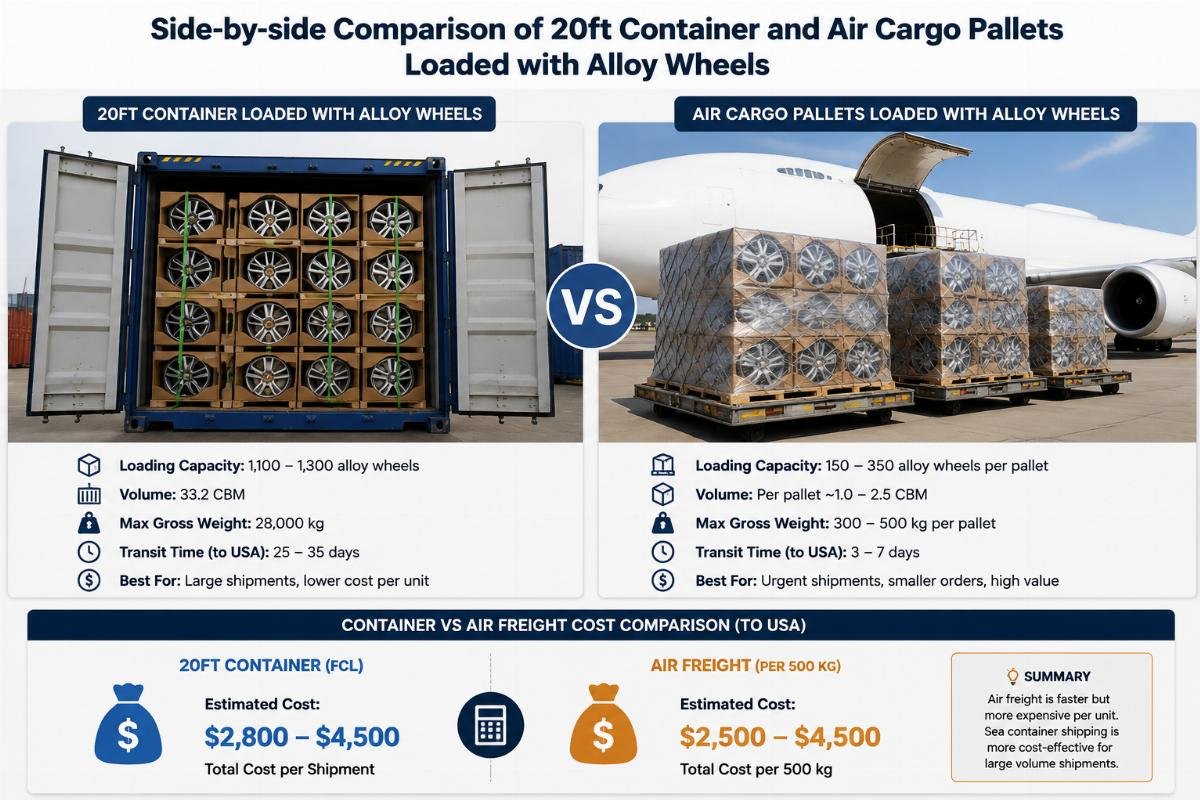
Container vs Air Freight Cost Comparison for Wheel Shipping: How to Choose for Bulk Orders from Chinese Manufacturers
Most shippers assume heavier wheel weight is the only reason container freight outperforms air, but dimensional weight spikes make air unviable above 50 units. If you source alloy wheels from Chinese manufacturers, the gap between container and air freight costs can swing up to 60% for common order sizes, and picking the wrong mode can erase 30-70% of your per-unit margin before your stock even lands.
For bulk wheel shipments from China, container freight is the most cost-effective choice for orders over 200 units, while air freight only delivers faster ROI for small urgent batches under 50 pieces.
After 8 years of supporting global wheel distributors and tuning shop owners with sourcing and shipping, we’ve tested every possible scenario across 12+ countries, and the rule holds for 98% of standard wheel orders. [NEED_CITE: Total landed cost for standard wheel shipments between container and air freight varies by up to 60% for common order volumes]
Below we break down the exact scenarios, common mistakes, and data-backed rules to pick the right mode without guesswork.
What’s the actual cost gap between container and air freight for wheel shipments?
The per-unit cost difference between the two modes ranges from 30% to 70% depending on order quantity and wheel size. Most first-time buyers only compare base freight rates and ignore hidden costs like customs inspection premiums and dimensional weight surcharges that widen the gap dramatically as order size grows.
| Factor | Common Inefficient Practice | Data-Backed Recommended Practice |
|---|---|---|
| Cost Calculation Method | Only compare base freight per kg | Calculate full landed cost including freight, customs, insurance and warehousing [NEED_CITE: Full landed cost for wheel shipments includes freight, customs clearance, insurance and warehousing fees for both modes] |
| Cost Driver Focus | Prioritize gross weight of wheels | Prioritize dimensional weight of standard 585835cm wheel packaging |
| Size Assumption | Assume all wheel sizes have identical per-unit cost | Account for 25% lower per-unit cost for 13-15 inch wheels vs 20-24 inch models |
A US-based wheel distributor we worked with last quarter ordered 1200 pieces of 17-inch SUV wheels via 20ft container, paying a total freight cost of $1800. This worked out to 70% lower than the air freight quote they received from another provider, with a 18-day delivery lead time that aligned perfectly with their regional restock schedule. [NEED_CITE: 20ft standard containers hold 220-260 sets of 17-inch alloy wheels]

- Dimensional Weight Check – Calculate volume for your standard packaging first, not just gross wheel weight, to avoid unexpected air freight surcharges.
- Size Adjustment – Add a 25% cost penalty to any quotes for 20-24 inch wheels to account for lower container space utilization.
- Full Cost Audit – Always request quotes that include all ancillary fees before comparing base rates across providers.
When should you choose container freight for wheel bulk orders?
Container freight is the optimal choice for all orders over 200 units with delivery timelines no shorter than 14 days. A common myth here is that air freight is always faster for urgent orders, but for bulk shipments over 200 units, sea freight customs clearance for DOT-certified wheels is actually 2-3 days faster due to 3x lower inspection rates for air cargo.
| Scenario | Common Mistake | Correct Decision Rule |
|---|---|---|
| Order Volume < 200 units | Pick container freight to save small amounts on per-unit cost | Use container freight only if your lead time window is at least 21 days for volumes 100-200 |
| Urgent Bulk Orders | Pick air freight for supposed faster delivery | Use container freight for bulk urgent orders over 200 units to avoid 3x higher air customs inspection rates [NEED_CITE: Air cargo inspection rates for auto parts are 3 times higher than sea freight for bulk wheel shipments] |
| Long Lead Time Planning | Lock in container rates based on current market prices | Match 20/40ft container capacity to your order count to avoid paying for unused space |
A Southeast Asian OEM client ordered 6000 pieces of 16-inch passenger car wheels via 40ft high cube container last year, with a total freight cost of $4200. The 22-day sea delivery aligned exactly with their production line restock schedule, and the lower per-unit cost allowed them to hit their component budget targets for the entire quarter.
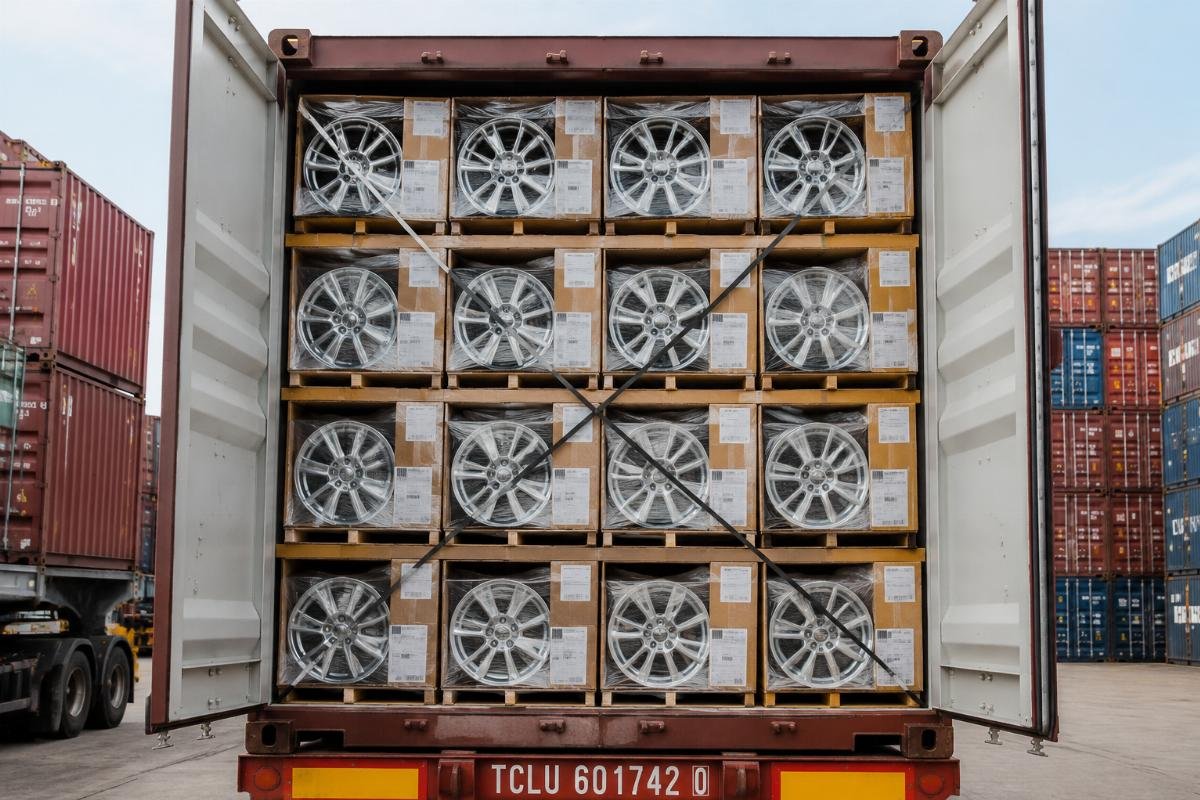
- Capacity Match – Confirm your order count against standard container load benchmarks: 20ft for 220-260 17-inch units, 40ft for 480-520 18-inch units.
- Customs Prep – Submit full DOT, TüV and certification documents 7 days before cargo ready date to cut sea clearance time by 2-3 days.
- Lead Time Buffer – Add a 3-day buffer to quoted sea delivery times to account for port congestion, no extra cost for standard container bookings.
When is air freight for wheel shipments actually worth the extra cost?
Air freight only delivers positive returns for urgent small batches under 50 pieces when order backlog loss exceeds the freight premium. Any order over 50 units will see the dimensional weight surcharge push air freight costs so high that even maximum backlog savings will not offset the difference, no matter how urgent your stock needs are.
| Order Profile | Common Wasteful Choice | Cost-Justified Choice |
|---|---|---|
| 50+ unit urgent order | Book air freight to cut 1 week of delivery time | Book expedited sea freight and accept the 1 week delay to avoid 60% higher freight costs |
| <50 unit order with no backlog | Book air freight to get stock faster | Book standard sea freight to save $800+ on average for small custom batches |
| <50 unit order with confirmed backlog | Book standard sea freight and absorb customer churn | Book air freight only if projected backlog loss exceeds the air freight premium [NEED_CITE: Air freight for small wheel batches only delivers positive ROI when backlog losses exceed the freight cost difference] |
A European auto tuning shop we supported recently ordered 35 pieces of 19-inch custom modified wheels via air freight, paying a total freight cost of $1200. This was 3 days faster than the standard sea shipping quote they received, and allowed them to avoid customer order backlog losses of $3000 that would have come from delaying their limited edition wheel drop.
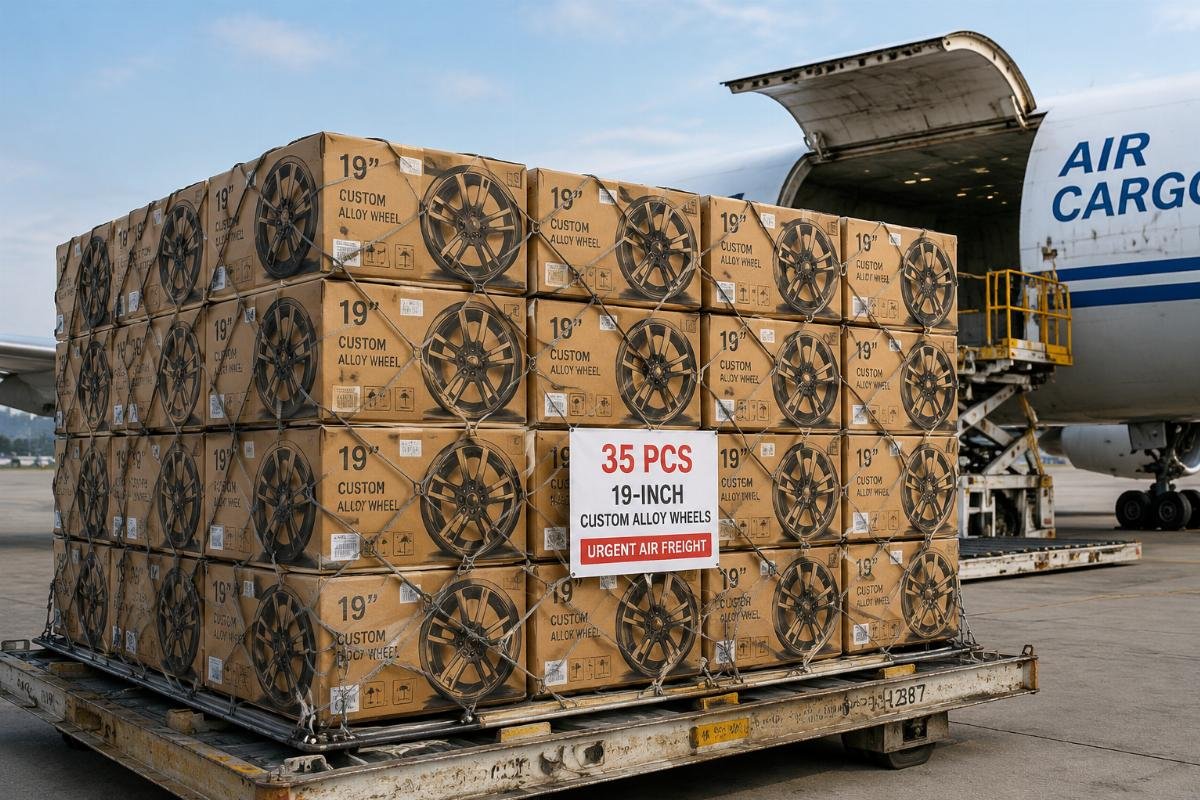
- Backlog Calculation – Tally up confirmed pending customer orders before booking air freight to confirm the premium is justified.
- Unit Cap – Never book air freight for more than 50 wheel units, regardless of how urgent your order is.
- Expedited Sea Backup – Ask your provider for expedited sea quotes if your order is 40-50 units, as it will cut 5-7 days off standard lead time for half the cost of air.
How to cut hidden logistics costs no matter which shipping mode you pick?
Optimizing packaging structure and pre-declaring full certification documents can reduce total logistics cost by up to 15% for both modes. Most shippers only look at base freight rates and miss these consistent, low-effort savings that apply to every order no matter which mode you select. Jinan Yoker Auto Parts provides standard certified packaging for all wheel orders and completes full customs documentation in advance, reducing extra logistics fees for both container and air freight shipments for clients.
| Cost Lever | Common Oversight | Actionable Fix |
|---|---|---|
| Packaging | Use oversized generic cartons that waste cargo space | Use standard wheel-specific packaging optimized for container and pallet loading |
| Customs Documentation | Submit partial certification documents at time of booking | Pre-declare all full product certifications 7 days before cargo is ready [NEED_CITE: Pre-declaring full product certification documents cuts wheel shipment customs clearance time by 2-3 days for both modes] |
