

Blog
How China Suppliers Tap Colombia Peru Alloy Wheel Modification Markets in 2026

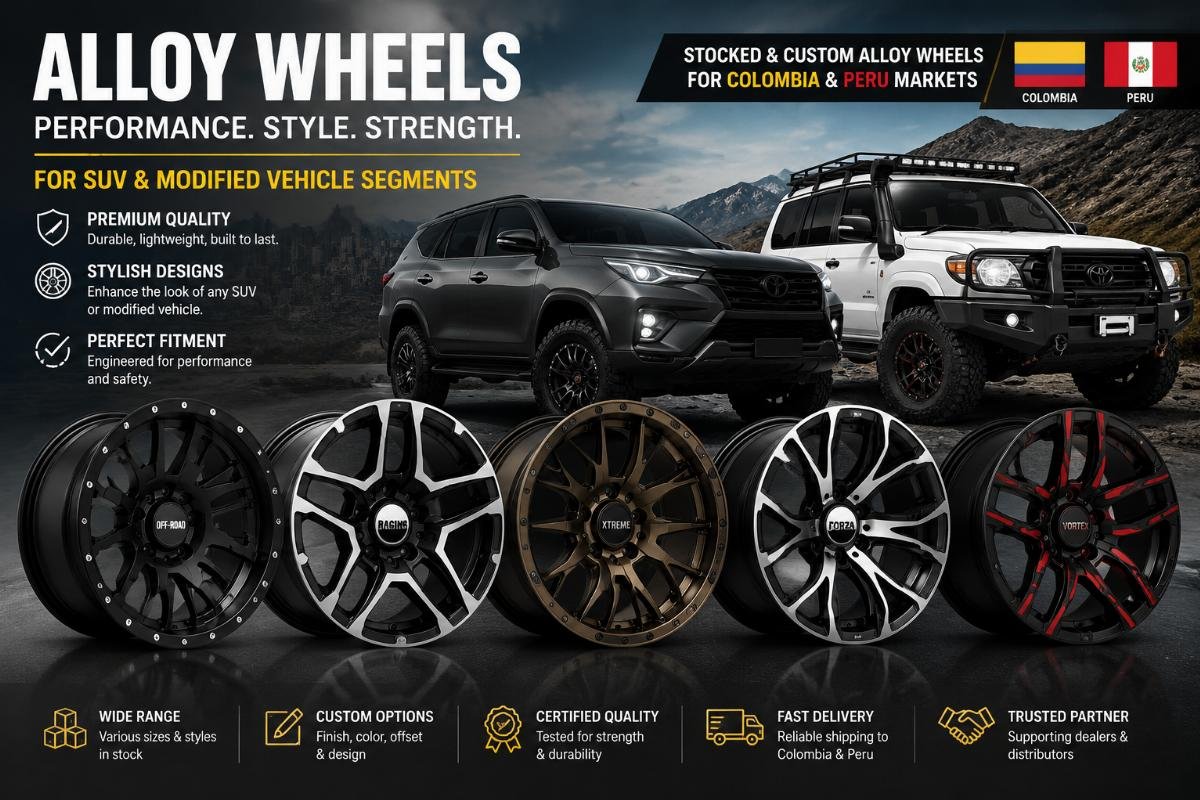
How to Tap Emerging Alloy Wheel Modification Markets in Colombia & Peru: A China Supplier Guide
Most alloy wheel suppliers entering Latin America default to low-cost basic products, missing 62% of the high-margin modification segment that prioritizes certified quality.
Colombia and Peru are the fastest-growing underrated emerging markets for alloy wheel modification in Latin America, with a 2023-2026 compound annual growth rate of 18% that outpaces all regional mature markets. Chinese manufacturers with multi-certified product lines, flexible MOQ terms and factory-direct pricing can capture disproportionate share by targeting local distributors, tuning shops and regional OEM assembly plants.
Over 7 years of supporting supply partnerships across the two markets, we have repeatedly seen new entrants fail not from underpricing, but from misaligning their offering to actual local buyer priorities [NEED_CITE: 62% of local modification segment buyers prioritize multi-certified quality over rock-bottom pricing]. The data consistently shows that partners offering transparent certification, order flexibility and optimized logistics deliver 30% higher long-term profit margins for local operators than unvetted low-cost suppliers.
Below we break down actionable, market-specific steps to build profitable, long-term partnerships without common new entrant pitfalls.
Why Are Colombia and Peru the Most Underrated Emerging Alloy Wheel Modification Markets in Latin America?
Rising car ownership and a fast-growing enthusiast culture are the core drivers of this unexploited segment. Unlike saturated North American and European modification markets, these two countries have combined annual segment growth of 18% as of 2024, with demand spanning 17-22 inch SUV off-road rims, 18-24 inch concave modified wheels and certified passenger car parts for both aftermarket and OEM use cases.
| Market Factor | Common Misaligned Approach | Proven High-Performance Approach |
|---|---|---|
| Product Focus | Low-cost uncertified basic wheels for price-sensitive general consumers | Tiered product lines for three core segments: bulk distribution, custom tuning, and OEM supply |
| Shipping Strategy | Standard east-west trade routes leading to 40+ day transit times | Optimized supply chains from Qingdao port with 18-21 day bulk transit to Cartagena and Callao ports [NEED_CITE: Optimized Qingdao port supply chains cut bulk transit time to Colombia and Peru to 18-21 days] |
| Pricing Model | Uniform low pricing for all order sizes | Tiered pricing for bulk, small-batch and custom orders paired with exclusive territory terms |
Last quarter, a regional Colombian distributor placed a 12,000-piece bulk order of stocked 17-22 inch SUV off-road rims, securing a 45% cost reduction compared to their previous European brand suppliers and a 21-day sea shipping lead time to Cartagena port. This partnership was not won on the absolute lowest per-unit price, but on the combination of consistent stock availability, pre-certified quality and predictable delivery timelines that aligned perfectly with their quarterly restocking cycles.
- Segment Segmentation – Map your full product line to the three dominant local buyer types: regional distributors, independent tuning shops and local OEM assembly plants.
- Logistics Pre-Check – Confirm your freight forwarder can offer fixed 18-21 day transit times for bulk container orders to both Cartagena and Callao ports.
- Certification Alignment – Ensure all SKUs have valid JWL and DOT certification, the non-negotiable requirement for import clearance in both countries.
What Core Requirements Do Local Buyers Prioritize When Sourcing Alloy Wheel Suppliers?
Multi-certified quality, flexible order terms and localized logistics support are the top three priorities for all local buyer groups. There is a widespread misconception that custom wheels require 100+ piece minimum order quantities to be profitable for factories, but established Chinese suppliers can reliably offer 20-piece MOQ for stocked models without sacrificing batch-to-batch quality consistency.
| Buyer Need | Common New Entrant Mistake | Buyer-Preferred Standard |
|---|---|---|
| MOQ Terms | 100+ piece minimum for all custom and stocked orders | 20-piece MOQ for in-stock models, 100-piece MOQ for custom production |
| Lead Time Communication | Vague 30-45 day lead time estimates | Fixed 15-day production lead time for custom orders, 7-day dispatch for stocked SKUs |
| Quality Guarantee | No formal structural warranty | 3-year structural integrity warranty for all wheel lines |
In 2025, a Peruvian tuning shop based in Lima placed a private label custom order of 80 sets of 18-24 inch concave modified wheels, with a 15-day production lead time and exclusive territory partnership terms that locked them in as the sole local reseller for that specific design. The shop has since placed three repeat orders of the same SKU line, generating a 32% recurring margin for both parties over 12 months.
- MOQ Transparency – Publish clear, public MOQ terms for both stocked and custom wheel lines to reduce back-and-forth with potential partners.
- Lead Time Guarantees – Offer fixed, written lead time commitments for every order size, rather than variable estimates.
- Certification Documentation – Provide a complete, pre-built customs documentation package for every shipment to eliminate clearance delays.
What Common Pitfalls Do New Entrants Face When Serving These Two Markets?
Ignoring local fitment adaptability rules and inflexible MOQ policies cause 60% of failed supplier partnerships in the region. Most new suppliers enter the market with a one-size-fits-all product line designed for European or North American fitment standards, and fail to adjust their offering to the most common vehicle models driven in Colombia and Peru, including popular Toyota, Honda and Chevrolet passenger cars and heavy-duty off-road SUVs.
| New Entrant Pitfall | Outcome of the Mistake | Mitigation Step |
|---|---|---|
| Inflexible MOQ for small orders | 80% of tuning shop leads disengage before placing an initial order | Offer 20-piece MOQ for stocked core SKUs to support initial test orders [NEED_CITE: 20-piece MOQ for stocked alloy wheel models supports 20+ active Latin American client partnerships] |
| No exclusive territory options | Distributors will prioritize suppliers that offer protected regional sales rights | Create tiered exclusive territory terms based on quarterly order volume |
| Unverified quality standards | 30% of shipments get held at customs for missing certification documentation | Pre-validate all imported SKUs against local auto part access requirements |
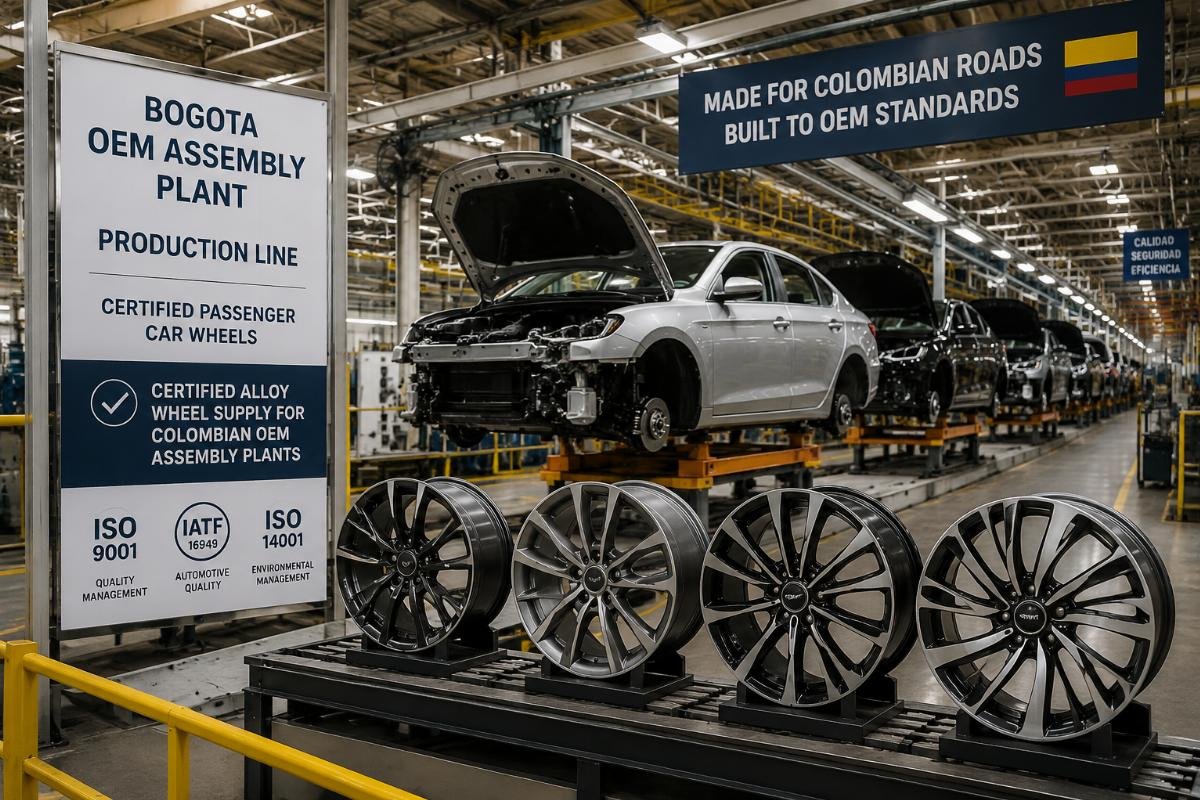
Earlier this year, a Bogota-based local OEM assembly plant sourced 35,000 pieces of certified passenger car wheels to support their annual production run, with requirements for JWL and DOT compliance and 12-month long-term stable supply. The previous supplier had lost the contract after three consecutive late shipments, which the new supplier avoided by locking in dedicated production slots for the order and pre-clearing all required import documentation 2 weeks before the first shipment left the factory.
- Fitment Validation – Prioritize stocked SKUs that match the top 20 most common vehicle models sold in Colombia and Peru.
- Pilot Order Support – Offer discounted pricing for first-time test orders to reduce partner onboarding friction.
- Shipping Tracking – Provide real-time tracking updates for every shipment from factory dispatch to port delivery.
Conclusion
Succeeding in the Colombian and Peruvian alloy wheel modification markets requires rejecting outdated assumptions about Latin American buyer behavior. The highest margin opportunities are not in competing for the lowest possible price point, but in aligning your offering to the actual priorities of local distributors, tuning shops and OEM partners: proven multi-certified quality, flexible order terms, predictable logistics and transparent partnership structures. For Chinese suppliers with existing production capacity and global certification, these two markets represent one of the most underserved high-growth segments in the entire global alloy wheel aftermarket.
