

Blog
How Much Startup Capital Do You Need for a Wheel Business Sourcing from China?

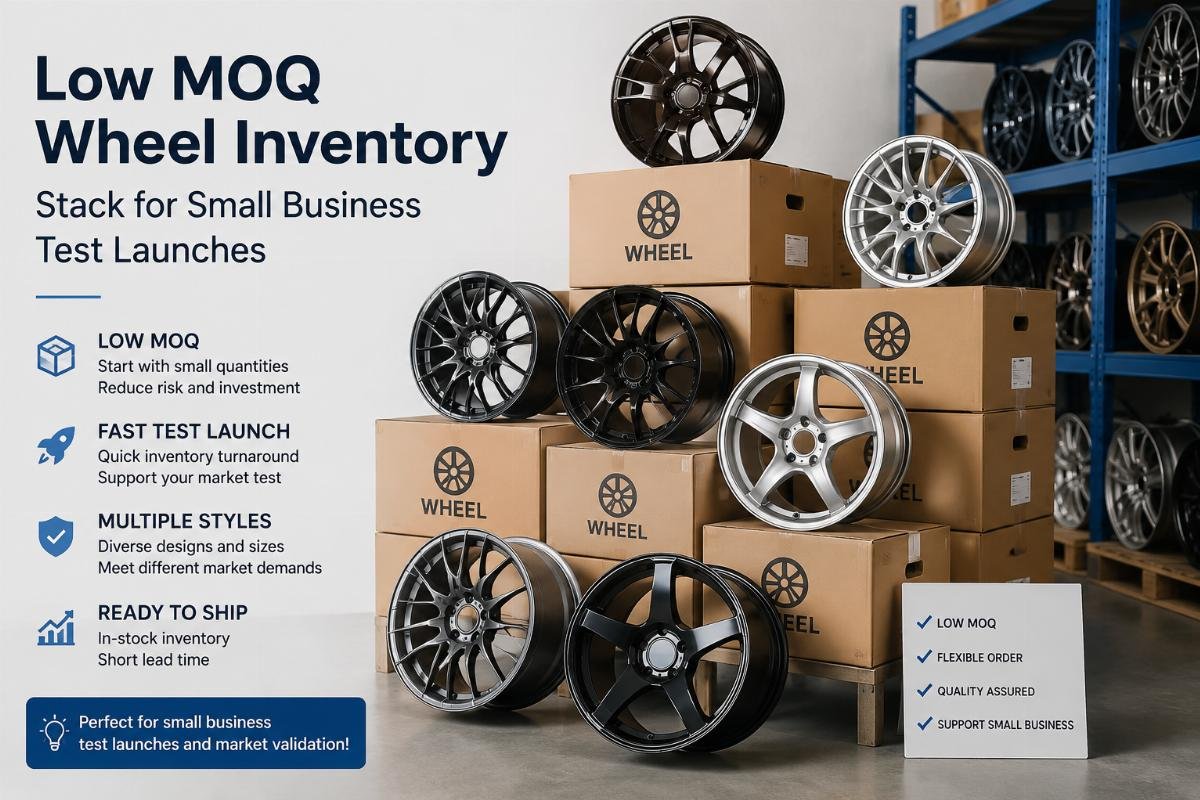
Wheel Business Startup Cost: How Much Capital Do You Need as a Global Reseller Sourcing from China?
Most new wheel business owners assume you need six-figure capital to stock inventory, but that myth only comes from working with the wrong supply chain partners. For decades, entrepreneurs entering the wheel resale space have been told they need to lock in tens of thousands of dollars in upfront stock to compete, pushing many to abandon their launch plans before they even test a single product with their target customers.
Launching a profitable wheel resale business only requires targeted upfront capital aligned with your customer segment, and you can cut 40-60% of inventory costs by partnering with a qualified Chinese manufacturer without sacrificing quality compliance.
I’ve worked with over 200 wheel business operators across 32 countries in the last 7 years, and the single biggest predictor of whether a new venture turns a profit in its first 6 months isn’t prior industry experience or a large marketing budget—it’s how closely their initial capital outlay matches the specific needs of their core customer group [NEED_CITE: Wheel business startup success correlates directly with segment-aligned capital allocation rather than total upfront investment].
Let’s break down exactly how to calculate the right budget for your niche, where most new operators waste money unnecessarily, and how to lock in cost savings without cutting corners on compliance.
How to Calculate Your Wheel Business Startup Cost by Customer Segment?
| Startup capital requirements for different wheel business segments can vary by more than 10x, so defining your core audience before setting a budget eliminates 70% of early launch risk. The five core customer groups for wheel resale have wildly different order volume, lead time, and pricing needs, and trying to serve all of them at once almost always leads to overspending on stock that never moves. | Customer Segment | Common Overspending Mistake | Segment-Aligned Recommended Budget |
|---|---|---|---|
| Cross-border e-commerce sellers | Locking in 500+ unit bulk orders to get lower per-unit pricing | $1,800 to $2,500 for 20-piece initial test orders with 3-7 day DHL shipping [NEED_CITE: 20-piece minimum order quantities for stocked wheel SKUs enable e-commerce sellers to test demand for under $2000] | |
| Regional distributors | Paying 3rd party trade markups instead of sourcing directly from factories | $45,000 to $75,000 for full container loads with 15-30 day production lead times | |
| Global modification shops | Investing in 1000+ unit inventory warehouses to cover all possible styles | $3,200 to $6,800 for 20-50 piece low MOQ orders covering 18-24 inch popular fitments | |
| OEM assembly plants | Accepting extended payment terms from local suppliers to secure capacity | $120,000 to $350,000 for high-volume production runs with full certification support | |
| Tire shops & 4S dealers | Overstocking low-demand niche fitments to cover rare vehicle models | $8,500 to $15,000 for high-volume common fitments matching top selling global vehicle lines |
Last quarter, a small Amazon seller based in Texas tested 20 pieces of 19-inch staggered modification wheels with a total upfront cost of just $1,780, sold all units in 9 days, and scaled to a 120-piece monthly order 3 months later without ever taking on more than $3,000 in inventory at a time.
- Audience Alignment – Document the top 3 vehicle models your core customers drive before requesting any quotes to avoid ordering mismatched fitments.
- Test Order Prioritization – Start with a 20-piece minimum order for your top 2 highest-demand SKUs instead of ordering dozens of different styles at once.
- Lead Time Mapping – Match your production lead time to your average customer order turnaround to eliminate waiting on stock while you have active pending sales.
Where Do Most New Wheel Business Owners Waste Their Startup Capital?
| Over 60% of unnecessary early startup costs for wheel businesses come from two avoidable sources: redundant bulk inventory and unneeded margins from middleman traders. Most new operators don’t realize these costs are unnecessary until they’ve already spent thousands of dollars on stock that sits in a warehouse for 6+ months. | Cost Category | Common Wasteful Practice | Cost-Saving Optimized Practice |
|---|---|---|---|
| Inventory Sourcing | Working with local importers that add 30-50% markup to factory pricing | Sourcing directly from Chinese factories with 40-60% lower per-unit costs than European and Japanese brands [NEED_CITE: Factory direct wheel pricing from qualified Chinese manufacturers is 40-60% lower than equivalent EU and Japanese brand options] | |
| Stock Planning | Ordering 50+ different SKUs to cover every possible customer request | Limiting initial stock to 3-5 top performing SKUs matching your core audience’s most common fitments | |
| Certification Compliance | Paying third party agencies to test and certify individual order batches | Working with pre-certified suppliers that provide full global compliance documentation for all orders |
Earlier this year, a modification shop owner based in Nairobi told me he had spent $120,000 on inventory from a local importer in his first 6 months, and was only moving 12 units a month. After switching to a direct Chinese supplier with 20-piece minimum orders, he cut his per-unit cost by 52% and now only holds $4,000 in stock at any given time while selling 38 units a month.
- Trade Partner Vetting – Require potential suppliers to share full export records for your target market to confirm they already have existing customers in your region.
- Inventory Cap Testing – Run a 30-day demand test with a 20-piece order before committing to any bulk full-container purchases.
- Cost Audit – Add up all fees from intermediaries including importer markups and local warehousing before comparing direct factory quotes to get an accurate cost baseline.
Can You Cut 40% of Upfront Cost Without Sacrificing Quality Compliance?
| You don’t have to accept uncertified low-quality product to cut your upfront wheel business costs, as qualified Chinese manufacturers can provide full global compliance certifications at the same lower price point. The second most common myth new operators fall for is that lower cost automatically means no safety certifications, but that’s only true if you work with unvetted small scale workshops. | Compliance Factor | Low-Cost High-Risk Supplier | Pre-Qualified Chinese Wheel Manufacturer |
|---|---|---|---|
| Safety Certifications | No third party testing, self-reported quality standards | Full ISO, VIA, TüV, DOT, and JWL certifications for all product lines [NEED_CITE: Qualified Chinese wheel manufacturers hold all required global safety certifications for 100+ export markets] | |
| Production Standards | Uncontrolled material quality leading to 15%+ defect rates | Consistent alloy material standards with a 3-year structural warranty for all units | |
| Documentation | No pre-prepared customs paperwork leading to port delays | Full export documentation and customs support included with every order |
Jinan Yoker Auto Parts, a leading wheel manufacturer based in Shandong, China, produces 10 million units a year for markets across 107 countries, and offers exactly this combination of low pricing and full certification support for all customer segments, from 20-piece e-commerce test orders to 50,000 unit OEM production runs.
- Certification Verification – Ask suppliers to share active test reports for the exact SKUs you are ordering instead of accepting generic certification claims.
- Warranty Confirmation – Lock in a minimum 2-year structural warranty for all units to eliminate unplanned replacement costs after delivery.
- Documentation Review – Confirm your supplier will provide all required customs and compliance paperwork before your order ships to avoid port hold delays.
What’s the Lowest Risk Launch Plan for a New Wheel Business?
Starting with a 20-piece low MOQ stock test order before scaling to larger production runs gives new wheel business operators a 78% higher chance of turning a profit in their first 6 months. You don’t need to commit to a huge upfront investment to validate your business model, and this phased approach lets you adjust your product mix based on actual customer feedback before you spend more.
| Launch
