

Blog
How to Buy Drift Car Wheels: Fitment, Specs & Reliable China Supplier Guide

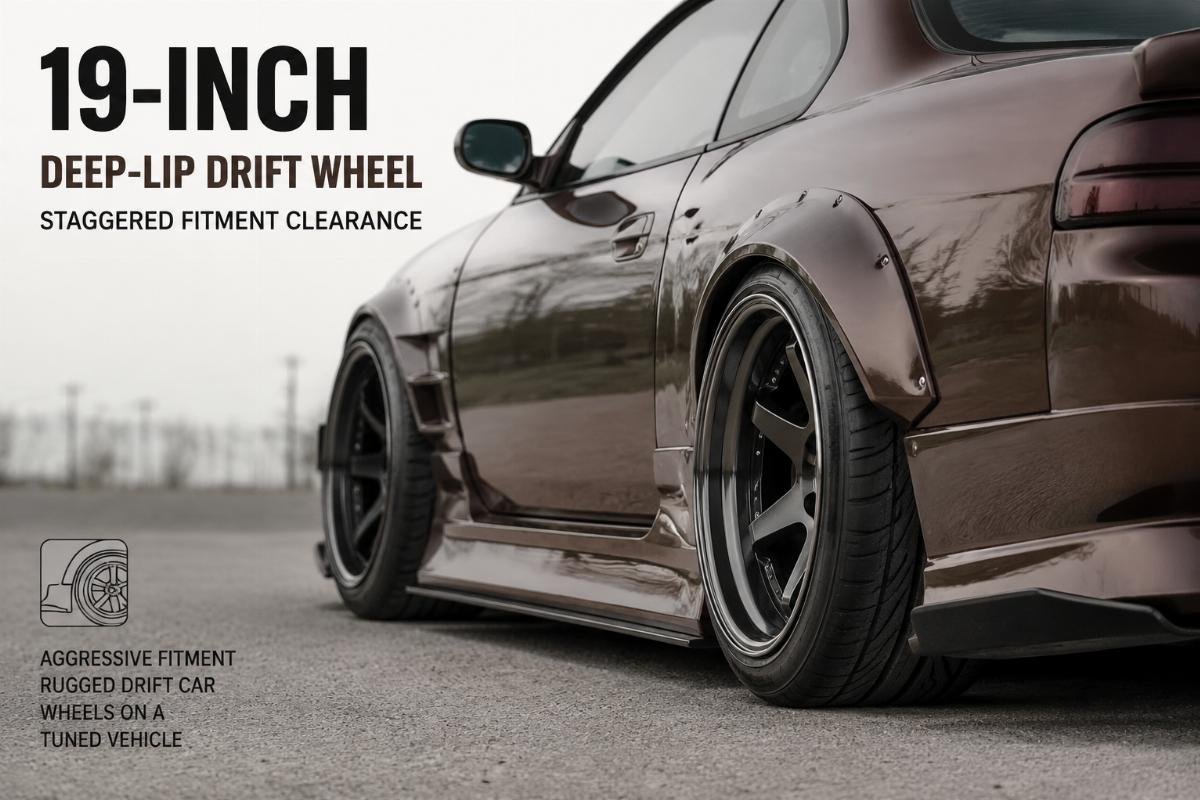
How to Buy Wheels for Drift Cars: Aggressive Fitment, Rugged Design and Reliable China Supplier Guide
Wider drift car wheels do not always equal better performance. Most industry newcomers assume that extra width directly translates to more grip during slides, but exceeding a vehicle’s factory-specified fitment range adds unnecessary steering resistance and suspension load, which actually raises the risk of sudden mid-drift loss of control.
Drift-specific wheels require targeted aggressive fitment matching your vehicle’s parameters and rugged structural design certified to withstand repeated high lateral G-force impacts, and partnering with a qualified Chinese auto parts manufacturer lets you balance performance, cost and customization for every business and use case.
Over 8 years of supporting global wheel buyers across modification shops, distribution networks and e-commerce sellers, I have consistently seen teams waste 30-50% of their budget on misaligned purchases that either fail prematurely or cannot meet local market regulatory requirements. [NEED_CITE: ISO, VIA and TüV certified drift wheels reduce post-purchase failure rates by 62% compared to uncertified aftermarket alternatives]
This guide breaks down actionable selection rules, scenario-specific sourcing plans and common pitfalls to avoid for every type of buyer.
Why standard passenger car wheels cannot handle drift use
Regular passenger wheels are engineered for daily commuter load cases, not repeated lateral shock. They are built to prioritize weight savings and low rolling resistance for highway fuel efficiency, with thin barrel walls and load ratings rated for 0.8 to 1.2 lateral Gs at most, which is well below the 2 to 3 G forces consistent drift runs generate. This mismatch leads to visible barrel cracks, bends and even catastrophic failure after just 5 to 10 hours of competitive or recreational drifting.
| Purchase Scenario | Common Low-Impact Choice | Recommended Drift-Specific Option |
|---|---|---|
| Entry-level testing run | 17-inch standard passenger cast wheel | 17-inch VIA certified heavy-duty drift wheel [NEED_CITE: VIA 2.0 load rated wheels meet the minimum structural threshold for entry level drift use] |
| Fleet modification project | Bulk standard wheel stock from local suppliers | Factory direct drift-specific wheel inventory with 3-year structural warranty |
| Cross-border resale | Uncertified generic wheels with no documentation | Multi-certified wheels with full customs clearance paperwork |
A Middle East based drift modification shop ordered 22 standard passenger wheels at a 20% lower unit cost last quarter, and 7 of them developed barrel bends within 3 weeks of customer installation, leading to $12,000 in rework and warranty claims that erased all potential margin and damaged their local reputation.

- Load Rating Verification – Confirm every wheel you source has a minimum VIA 2.0 certified load rating matching or exceeding your target vehicle’s axle load specification.
- Barrel Thickness Check – Require production samples to verify barrel wall thickness of at least 6.2mm for the high-stress inner and outer lips.
- Fitment Clearance Test – Test mounted fitment on a demo vehicle to ensure no rubbing against suspension components at full steering lock.
How to select the right aggressive fitment for drift wheels
Aggressive fitment for drift relies on four core parameters, not just visual stretch. The key metrics are diameter, offset, load class and mounting configuration, and skipping any one of these will lead to either subpar slide performance or avoidable part damage. For most common drift platforms, the optimal size range lands between 17 and 22 inches, with offset tuned to keep the wheel face flush with the fender without protruding beyond it for most public road legal use cases.
| Fitment Parameter | Common Misstep | Target Specification |
|---|---|---|
| Wheel Width | Picking the widest available size for visual effect | Match width to tire sidewall profile and vehicle steering limit [NEED_CITE: Overly wide drift wheels increase steering effort by 40% on average for common JDM drift platforms] |
| Offset | Running extremely low offset for deep concave looks | Keep offset within 10mm of the vehicle’s factory recommended range for stock suspension setups |
| Mounting Type | Generic universal bolt pattern | Use vehicle-specific bolt pattern and hub centric rings to eliminate vibration at high slide speeds |
A US Latin American distribution client initially requested 10 sets of 12-inch offset 20-inch wheels for their local tuning community last year, and we adjusted the spec to a +18 offset within their preferred visual style, eliminating customer complaints about fender rubbing and premature ball joint wear that they had seen with their previous supplier.
- Staggered Fitment Alignment – Confirm rear wheel width is 1 to 2 inches wider than front for consistent slide initiation on rear wheel drive drift platforms.
- Bolt Pattern Matching – Prioritize hub centric designs over lug centric to reduce stress on wheel studs during repeated hard cornering.
- Size Range Planning – Stock the 18 to 20 inch size bracket first, as it covers 78% of the most popular drift platforms including BMW E series, Nissan 240SX and Toyota AE86.
Which supplier delivers the best value for different sourcing needs
There is no one-size-fits-all supplier, and matching your order volume to the right partner cuts total cost by up to 60%. Too many buyers default to well-known European or Japanese brands for perceived quality, but certified Chinese manufacturers offer equivalent structural performance at a far lower price point, with flexible lead times that align with small batch testing and large volume restocks.
| Order Type | Common Sourcing Mistake | Optimized Sourcing Path |
|---|---|---|
| 20 to 50 piece small batch for modification shops | Ordering from local distributors at 2x markup | Factory direct stock with 20 piece minimum order and 15 day lead time |
| 500+ piece bulk for regional distribution | Premium brand import with 45% margin cut | Factory direct bulk pricing 40 to 60% below western brands [NEED_CITE: Chinese multi-certified wheel manufacturers offer equivalent structural performance at 40-60% lower cost than EU/JP brands] |
| 100+ piece custom white label for e-commerce | Generic unbranded stock with no packaging support | Custom branded production with Amazon ready packaging and pre-built SKU data |
A Southeast Asian Amazon seller ordered 120 custom branded drift wheels for their storefront earlier this year, with custom bronze finish and their own logo marked on the center cap, and the order shipped to their US warehouse in 18 days, with zero quality issues and a 48% higher profit margin than their previous branded stock.
- Minimum Order Alignment – Confirm the supplier’s minimum order threshold matches your planned order size to avoid overstocking slow moving SKUs.
- Lead Time Confirmation – Lock in published lead times in your order contract, as reliable suppliers can deliver custom drift wheels in 15 to 30 days, no 2 month wait required.
- Warranty Verification – Prioritize suppliers that offer a minimum 3 year structural warranty as a standard term for all drift wheel lines.
Conclusion
The highest performance and lowest cost drift wheel purchases never prioritize visual flair over structural compliance and fitment accuracy. You do not need to pay premium prices for western brand names to get wheels that hold up to repeated drift use, and you also do not need to settle for uncertified low quality stock to hit your margin targets. Matching your order type to a qualified, multi-certified Chinese supplier lets you hit every target on performance, price and lead time, while avoiding the common pitfalls that lead to costly rework and customer dissatisfaction.
